
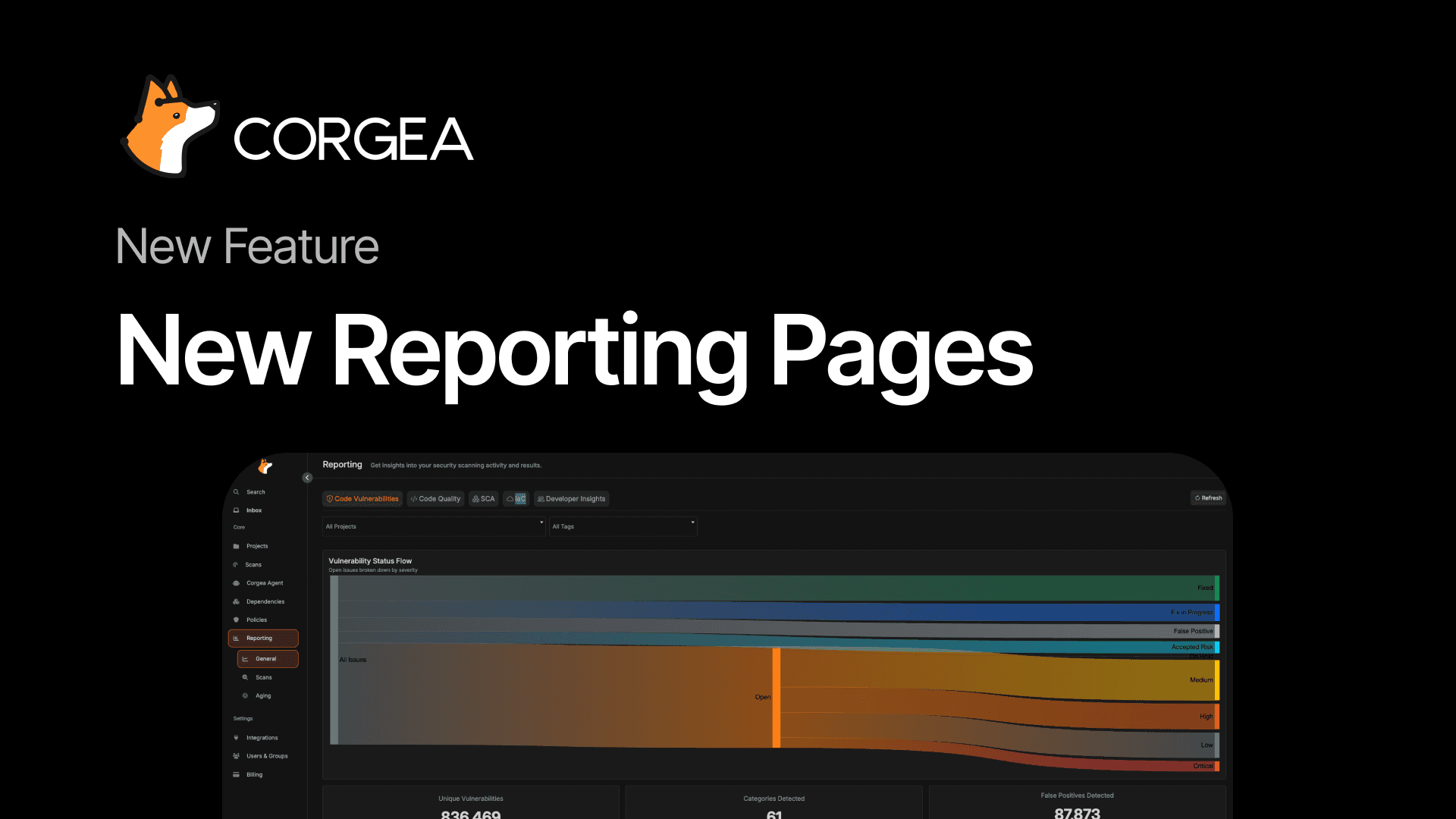
Security reporting is only useful if it helps you understand what is happening, where risk is building, and how teams are actually responding. Corgea Reporting is built to do exactly that by bringing together scan activity, vulnerabilities, and developer insights into one place so teams can track trends, measure progress, and improve ownership across the organization, from AI SAST to dependency, code quality, container, and IaC findings.
What is it and what makes it special
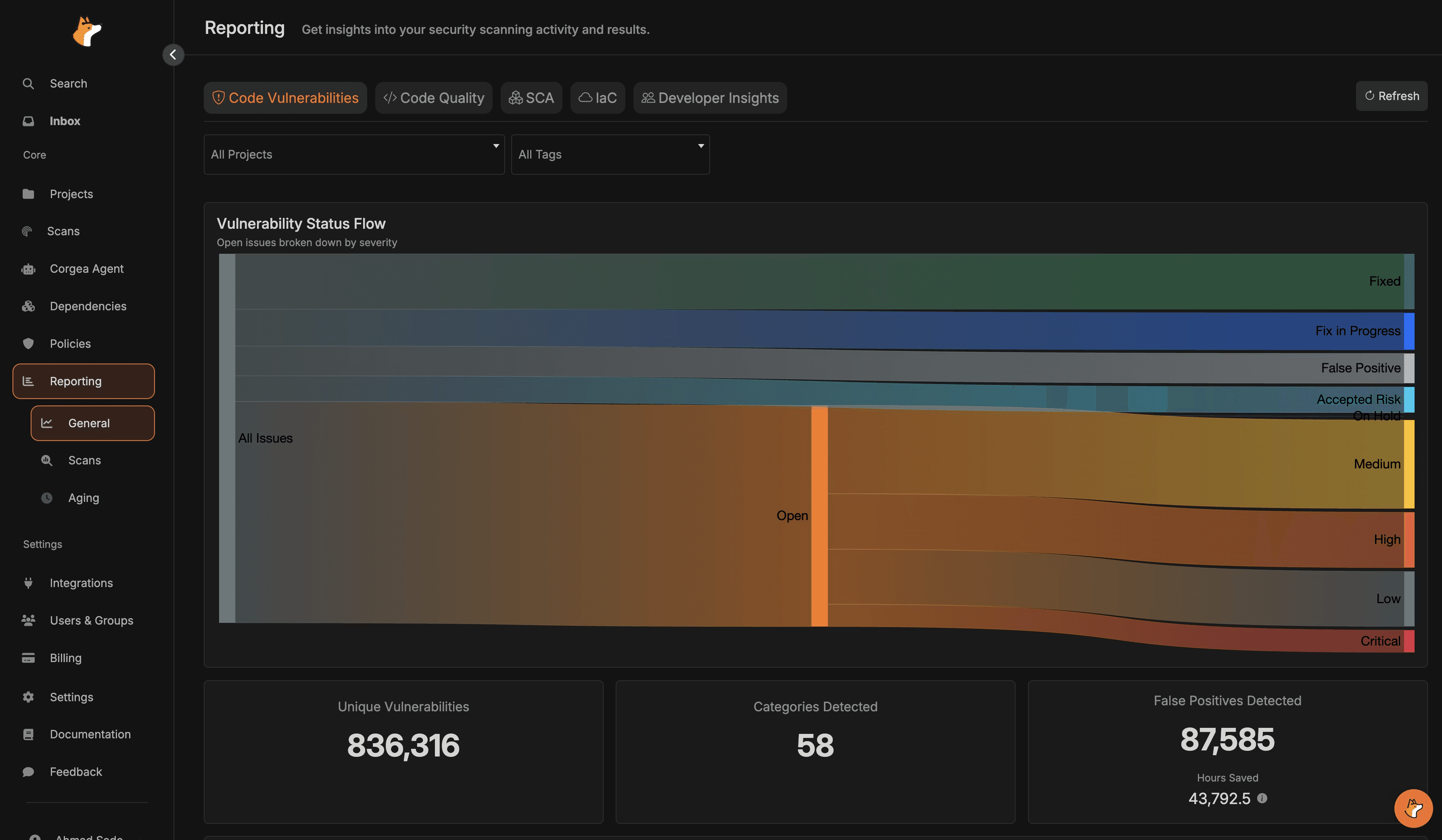
Corgea Reporting gives teams a unified view across multiple parts of application security and engineering quality. Instead of looking at disconnected dashboards, you can report across code vulnerabilities, dependency risks, code quality findings, infrastructure issues, and developer insights in one reporting experience. That means you can see the bigger picture across code, SCA, IaC, and developer workflows without jumping between tools.
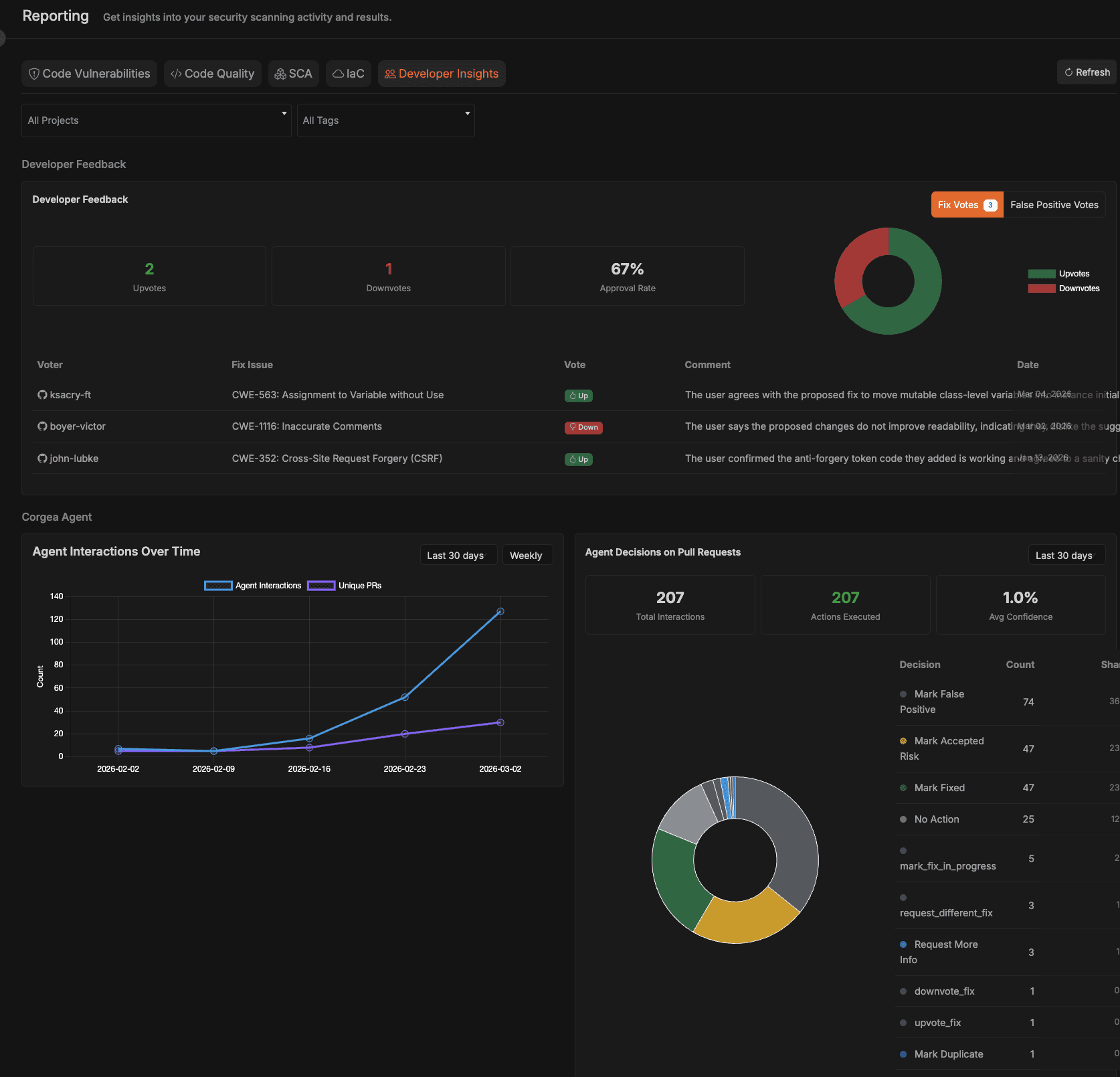
What makes it especially useful is that it is not limited to just security findings. Reporting also includes developer insights, combining developer feedback with Corgea Agent usage trends, decisions, and active-user data. That gives teams visibility not only into what issues exist, but also into how developers are engaging with security and remediation over time.
The reporting views are also practical and flexible. Teams can filter by project or by tags to group reporting in a way that matches how they operate, whether that means looking at a single application, a business unit, or a custom slice of the organization. Time-based views can also be adjusted to show trends over different periods, making it easier to review data daily, weekly, monthly, or yearly depending on the audience and use case. The docs specifically note date-range controls and grouping by day, week, or month for time-series charts, along with project and tag filters across charts.
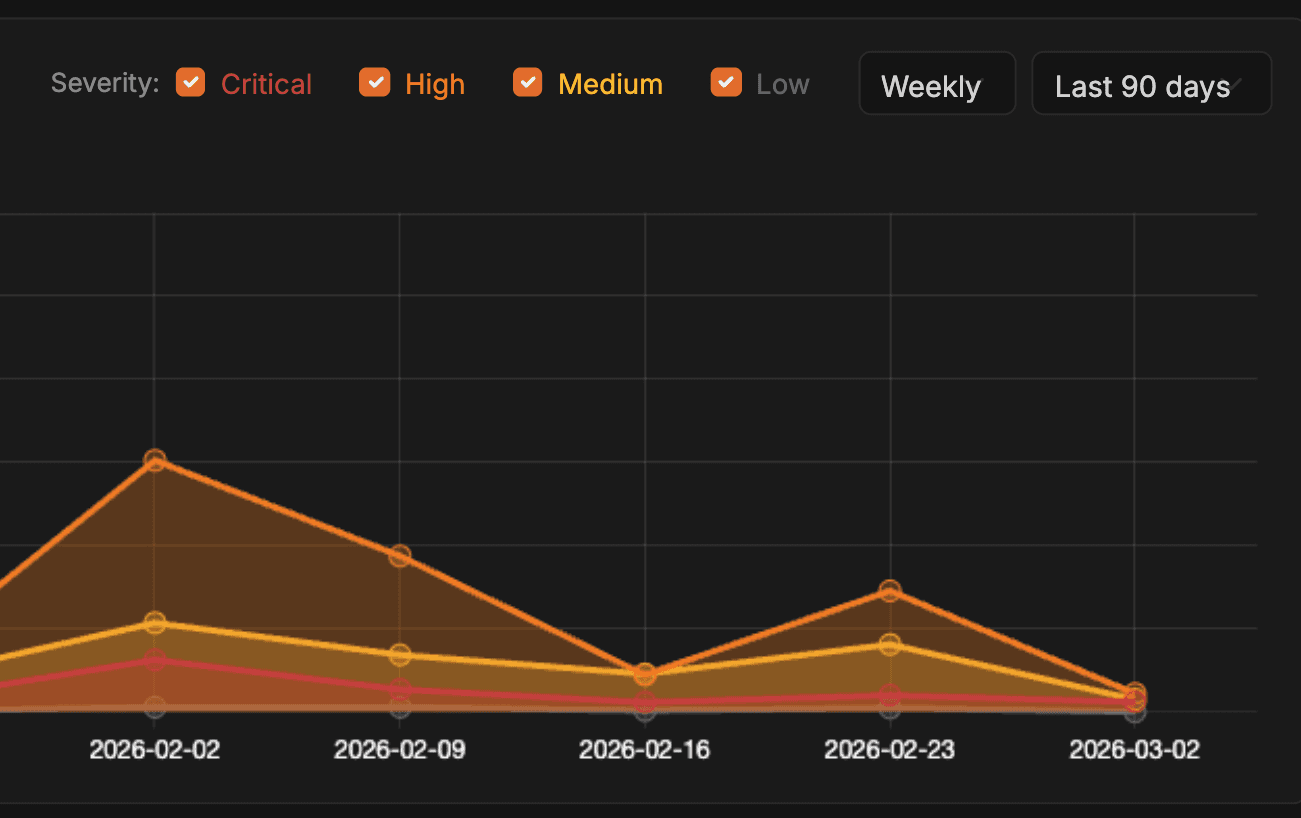
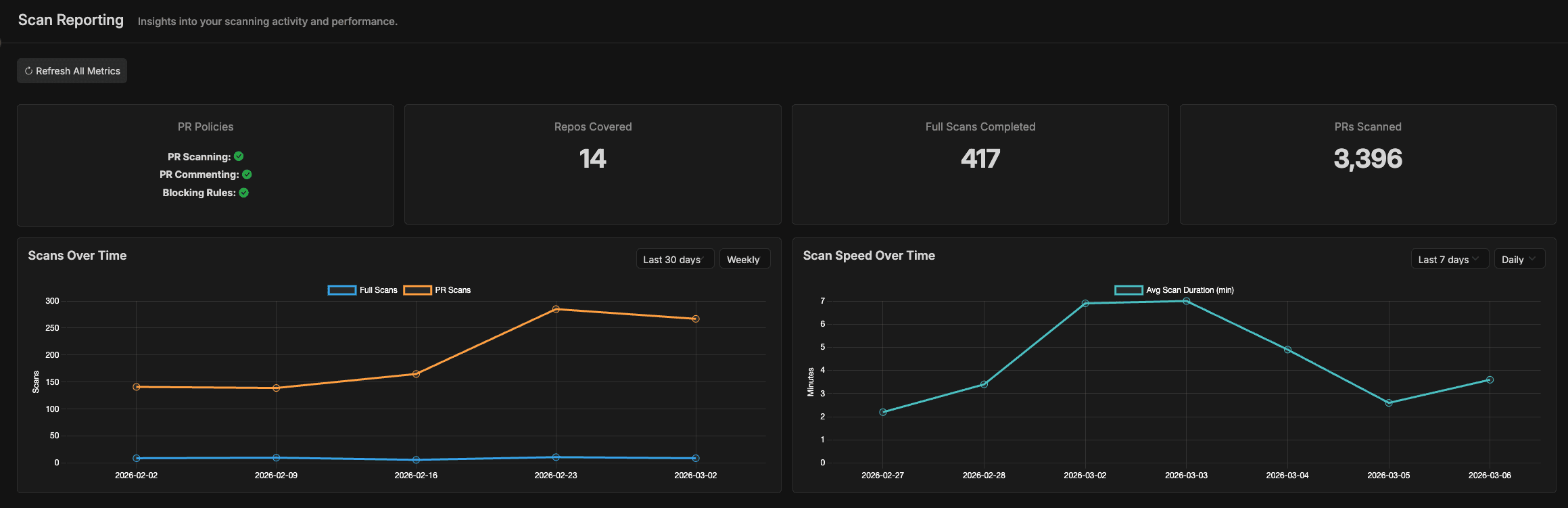
Corgea Reporting also goes beyond high-level summaries. The platform includes dedicated reporting for scan operations, such as PR policy status, repository coverage, full scans, PR scans, and scan performance over time. For teams using policies, the aging report adds another layer by showing overdue issues, average age, and where risk is accumulating by project and assignee.
Conclusion
Corgea Reporting is designed to give security and engineering teams a clearer view of both risk and progress. By bringing together reporting across code, dependencies, code quality, infrastructure, cloud-related issues, and developer experience, it becomes easier to understand what matters, where to focus, and how programs are improving over time. With flexible filtering by project, tags, and time, teams can move from generic dashboards to reporting that is actually useful.