

Most security tools only find bugs after they’re written. You ship a PRD, engineers build it, and then a scanner or pentest finds the architectural vulnerability that should have been caught at the whiteboard stage.
That’s backward. The cheapest time to fix a security issue is before code exists.
Today we’re launching Corgea Security Design Reviews: an AI-native workflow that catches design-level security threats at the PRD stage. Not after merge. Not after deploy. Before anyone writes a line of code.
How it works
-
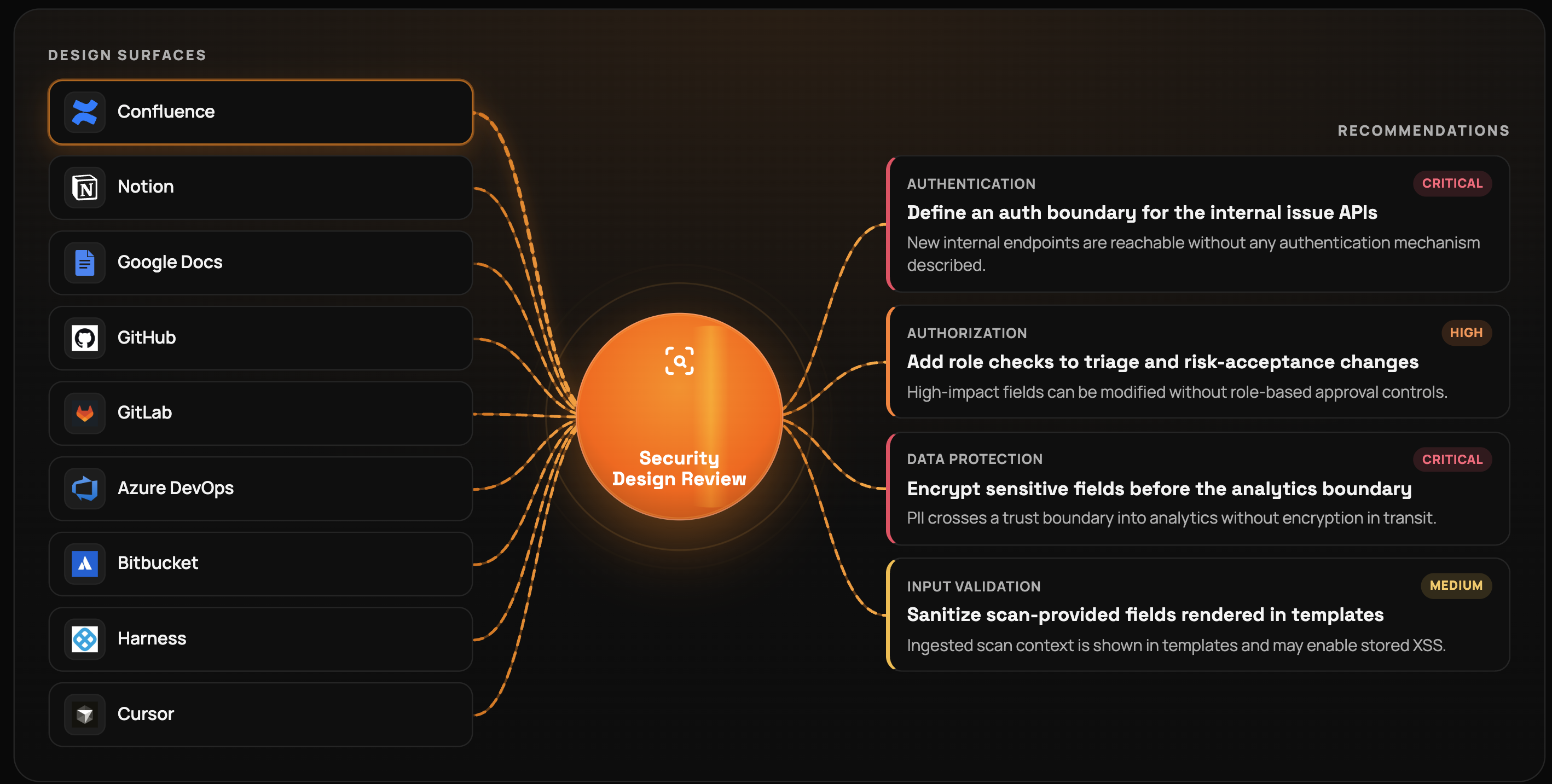
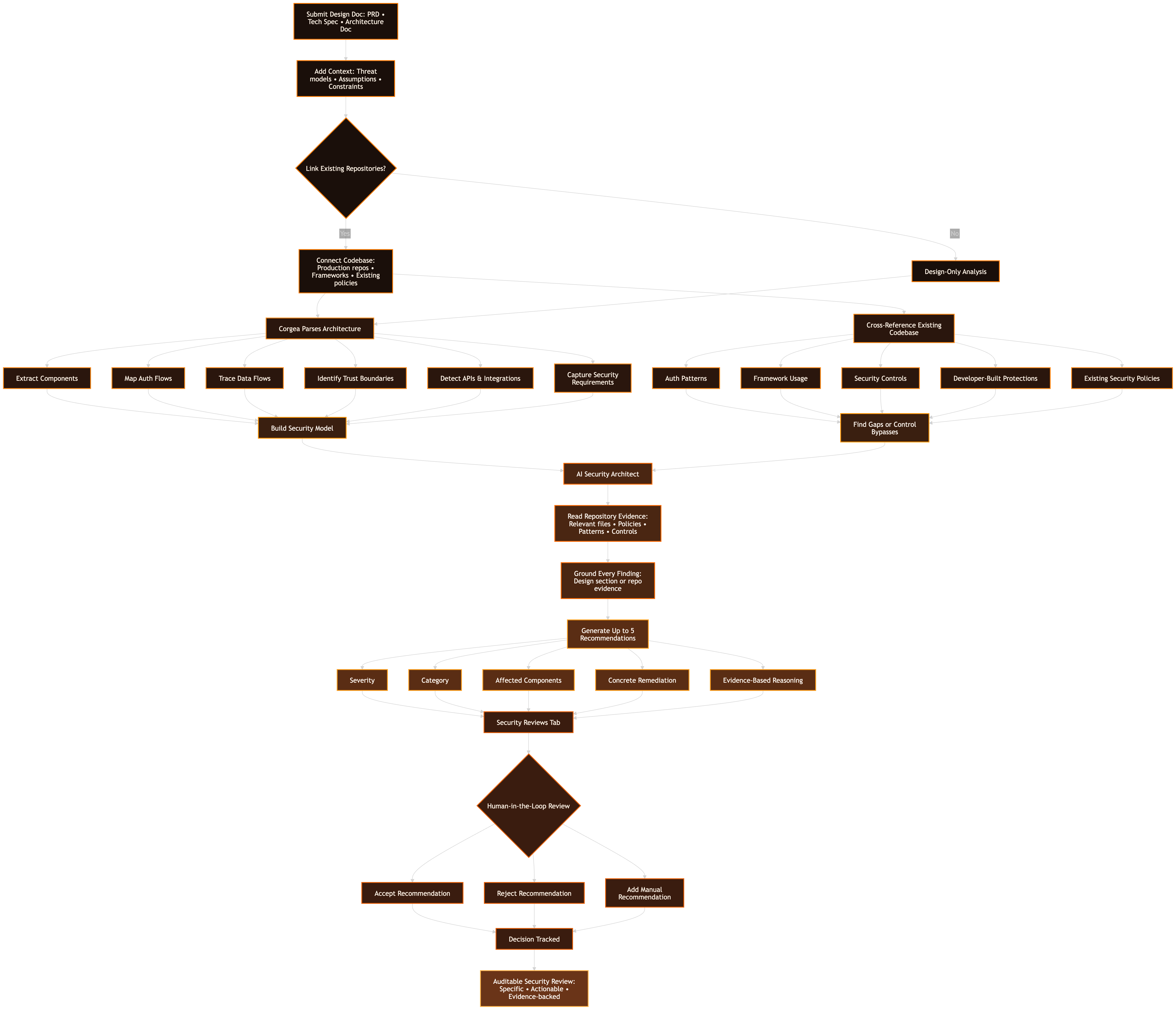
Submit your design doc. Paste your PRD, tech spec, or architecture document. Add context like threat models, assumptions, or constraints. Optionally link existing repositories so Corgea understands how the new design interacts with real code already in production.
-
Corgea parses the architecture. The system extracts components, authentication flows, data flows, trust boundaries, external integrations, APIs, and explicit security requirements. It doesn’t just read your doc. It builds a security model of what you’re proposing to build.
-
It cross-references your existing codebase. For linked projects, Corgea examines the actual code and existing security policies: the frameworks you use, the auth patterns already in place, the protections your developers already built. It uses this to understand whether the new design creates gaps or bypasses existing controls.
-
An AI security architect reasons over everything. It reads files directly from your repositories to gather evidence. Every recommendation is grounded in something specific from your design doc or codebase. Never generic advice.
-
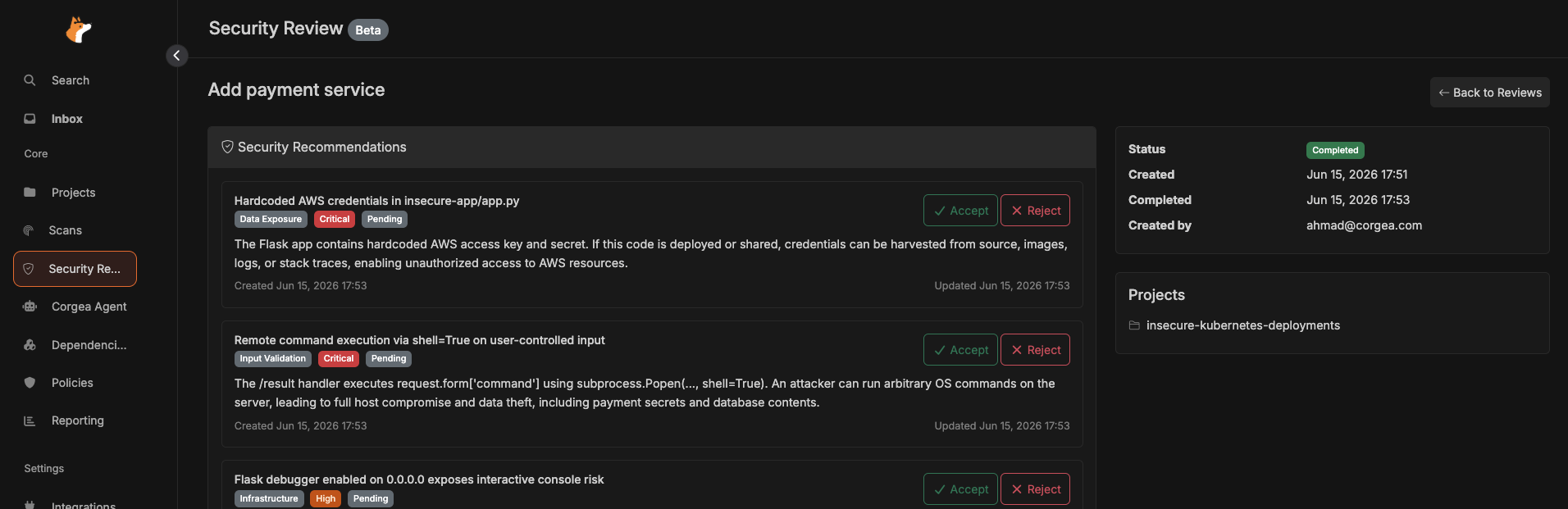
You get up to 5 prioritized, actionable recommendations. Each with severity, category, affected components, concrete remediation guidance, and reasoning tied to specific design sections or repo evidence.
-
Human-in-the-loop review. Admins review recommendations in a dedicated Security Reviews tab. Accept, reject, or add manual recommendations. Every decision is tracked.
Real example
A fintech team pasted a design doc for a new vendor payout API. The design proposed a /payouts endpoint that accepted a vendor_id and amount parameter. The auth section mentioned “standard API key validation.”
Corgea flagged it: the design had no authorization check linking the authenticated user to the vendor they were attempting to pay. An authenticated user could pay any vendor. The recommendation included a concrete fix: add a user_id ↔ vendor_id ownership check before processing the payout, with a reference to similar auth patterns already implemented in the team’s existing Django codebase.
That bug would have sailed through code review. It would have passed standard SAST scans (the code itself was “correct”). A pentest might have caught it, months later, for tens of thousands of dollars.
Corgea caught it at the PRD stage. Fix cost: zero lines of code changed.
Why this matters now
Two trends make design reviews urgent:
AI-generated code is accelerating development velocity. Developers using Copilot, Cursor, and Claude Code are producing features faster than security teams can review them. You can’t bolt security on at the end when the end comes 3x faster.
Architectural vulnerabilities are the most expensive to fix. A 2026 NIST study found that design-stage flaws cost 6x less to remediate than production-stage flaws. OWASP’s top risks (broken access control, cryptographic failures, injection) are architectural decisions, not code-level bugs.
Where this fits
Security Design Reviews is a new product in the Corgea platform. It sits upstream of everything else:
- Design Reviews → catch threats before code
- SAST + SCA + IaC + Secrets + Container scanning → find and fix issues in code
- AI Pentesting → validate exploitability at runtime (more on this Thursday)
- Learning + Prework → your platform gets smarter with every scan (more tomorrow)
One platform. Design to production.