

In May, 95% of Corgea pull request scans finished within 10.1 minutes. This month, 95% finish within 2.0 minutes. That’s five times faster in six months.
The number is end to end: it starts when a pull request triggers the scan and stops when the results are on the pull request. It also covers the full scan, which means code, dependencies, containers and infrastructure as code are all checked in that time.
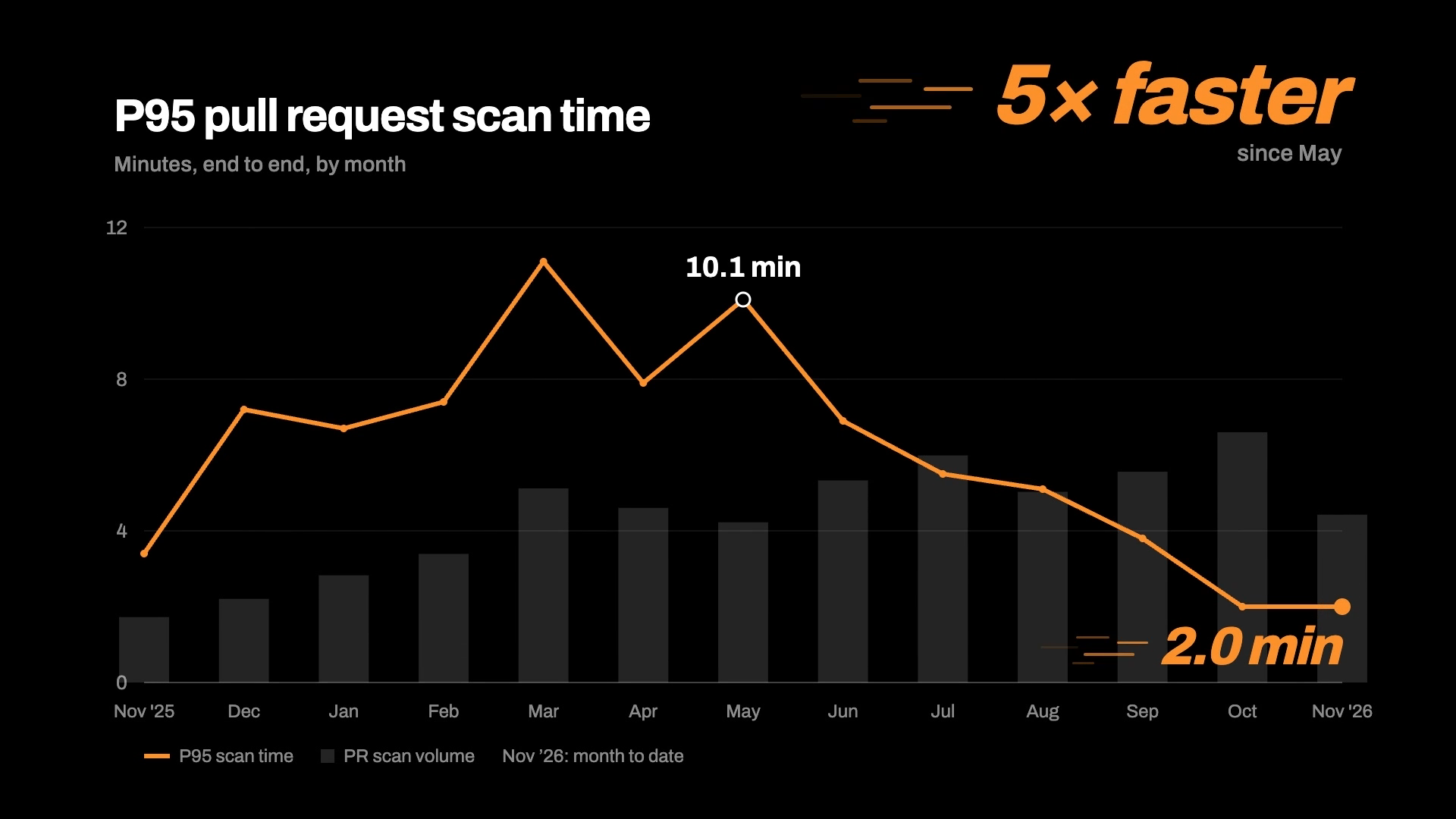 P95 end-to-end pull request scan time by month. November 2026 is month to date.
The chart shows the whole year, including the part we’re less proud of. Scan times climbed through the first half of the year and peaked at 11.1 minutes in March. Since May they have come down every month while scan volume grew, and in October they reached 2.0 minutes, where they’ve held through November.
Accuracy didn’t drop
A fast scanner that misses things or floods you with noise doesn’t help. Compared with legacy scanners, Corgea finds twice as many true positives and raises three times fewer false positives. When it finds something real, it writes the fix and suggests it in the pull request.
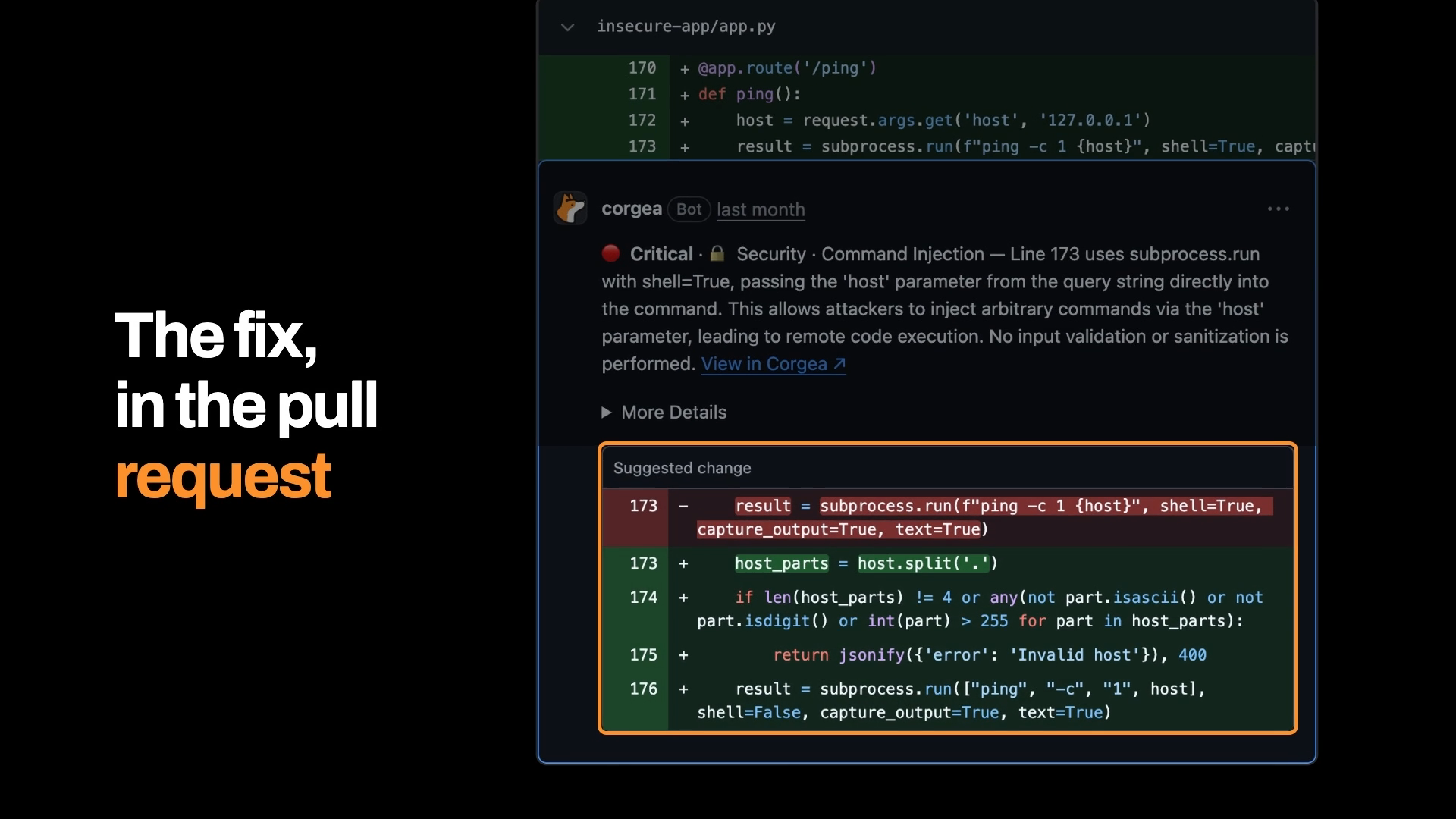 Corgea’s comment on a pull request in our public insecure-kubernetes-deployments demo repo.
How it compares with Semgrep
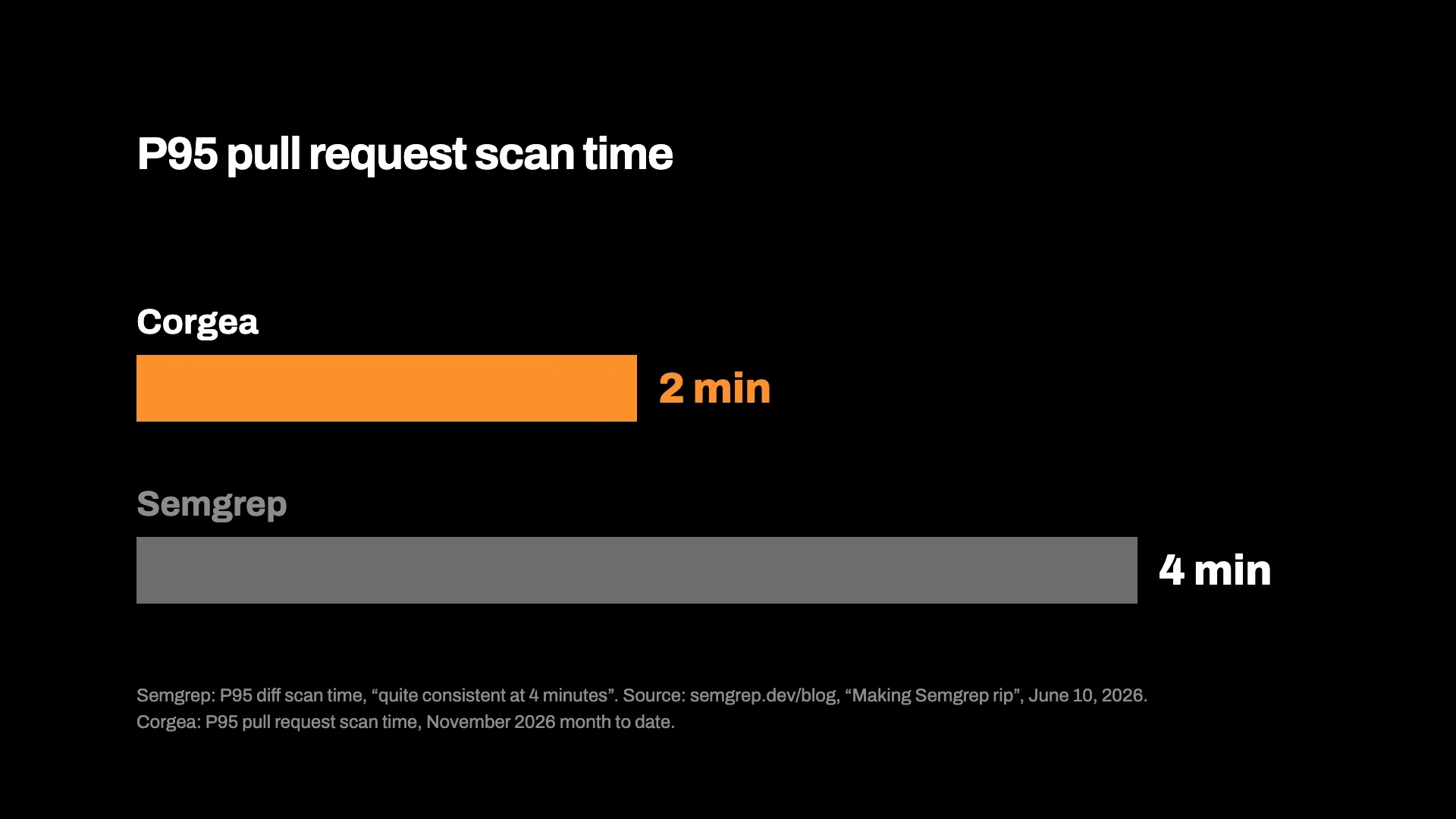
In June, Semgrep wrote that after a round of performance work, the p95 duration of its diff scans across its fleet is “quite consistent at 4 minutes”. Our p95 for pull request scans this month is 2.0 minutes. Each figure comes from the company’s own fleet, so this isn’t a controlled benchmark, but both describe roughly the same wait: how long a developer waits for the scan on a pull request.
Why we set the bar at two minutes
AI coding agents now open pull requests all day, and security checks shouldn’t be the step everyone waits on. A common rule of thumb is that a test suite should finish in under ten minutes. For a check that runs on every pull request an agent opens, ten minutes is a long time, so we aimed for five times faster than that.
What we changed
We made three changes.
First, we scan only what changed. Most pull requests touch a handful of files, so Corgea’s agents now focus on the changed code instead of re-analyzing the whole codebase on every commit. (CLI AI SAST scans have been incremental by default since Q3.)
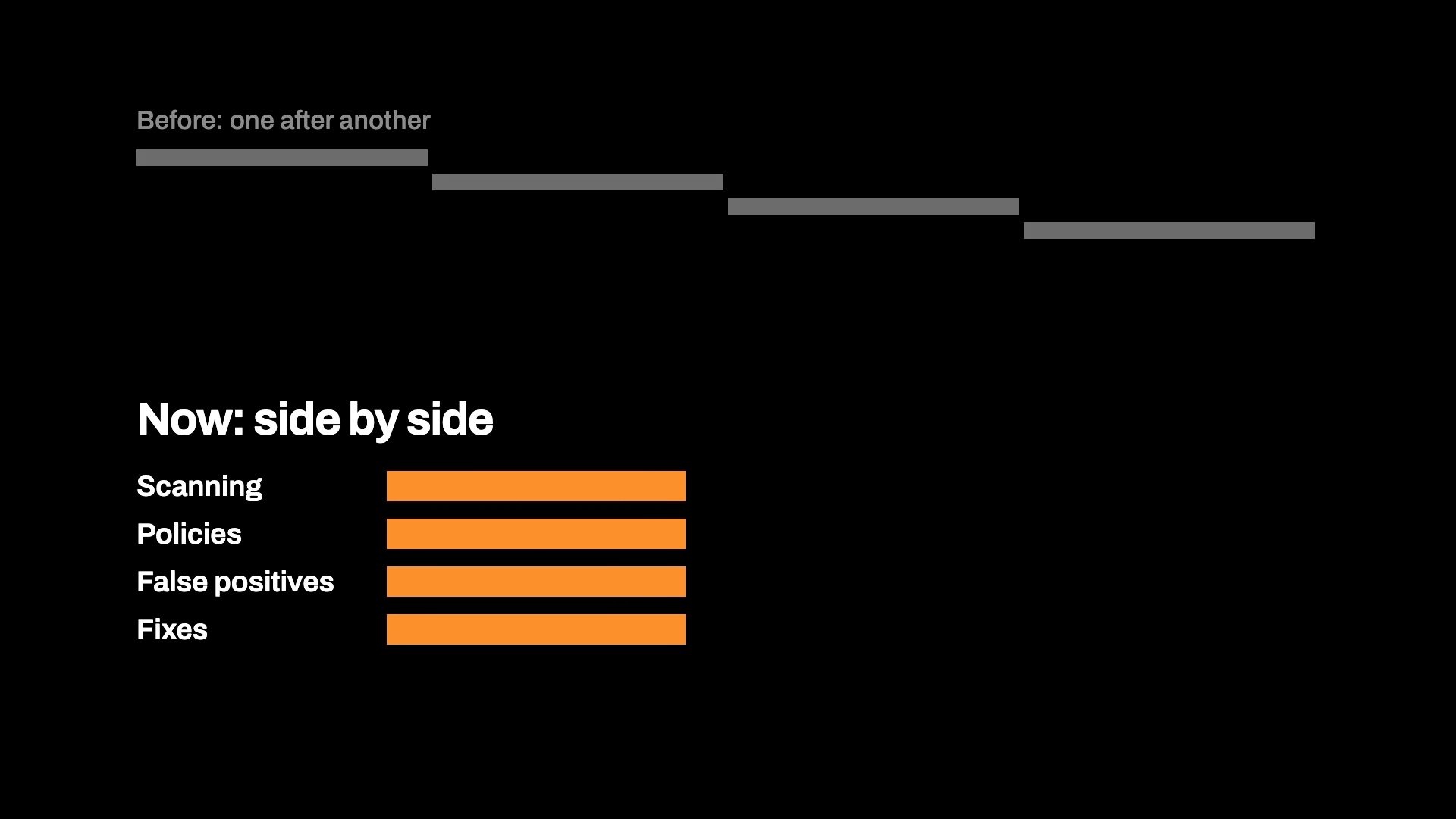
Second, the stages of a scan run in parallel. Finding issues, applying your policies, checking for false positives and generating fixes used to run one after another. They now run side by side, and we got more careful about which stage has to wait for which.
Third, we cut wasted work. Each file is read once instead of being re-read by several steps, and we skip files that can’t contain vulnerabilities. The scanning fleet also scales with demand, so a pull request opened at a busy hour doesn’t sit in a queue.
What this means on a pull request
Security feedback now shows up while the developer is still reviewing the pull request, before they’ve moved on to the next task.
If you don’t use Corgea yet, book a demo and we’ll run it on one of your repositories.