If you are looking for a depthfirst alternative, Corgea is strongest when your priority is AI-native detection, reachability-aware prioritization, review-ready fixes, and autonomous AI pentesting from a platform you can pilot on your own code today. depthfirst may still be a good fit if its autonomous security agent approach maps closely to your program and you are comfortable evaluating a newer entrant. This guide compares the best depthfirst alternatives in 2026 so an AppSec buyer can shortlist quickly, then validate on real repositories.
depthfirst positions around autonomous security agents that reason across code, infrastructure, dependencies, and the runtime environment to find exploitable vulnerabilities, including business logic flaws, and ship merge-ready fixes. It is a newer entrant in the autonomous AppSec space. Teams start searching for depthfirst alternatives for specific reasons: it is a new vendor, autonomous security positioning is still maturing across the market, buyers face uncertainty about depth and evidence, and it can be hard to compare code, supply chain, secrets, and agentic pentesting claims across vendors. The tools below give you proven, pilotable options.
TL;DR: quick picks for depthfirst alternatives
- Best AI-native alternative to depthfirst: Corgea
- Best developer-first SCA option: Snyk
- Best open or custom-rule SAST option: Semgrep or OpenGrep
- Best enterprise governance option: Checkmarx or Veracode
- Best all-in-one coverage option: Aikido
- Best cloud-to-code option: Wiz Code
- Best AppSec posture (ASPM) option: OX Security
If you want AI-native detection plus autonomous AI pentesting you can evaluate now, start a Corgea demo on a security-sensitive service.
Why teams look for depthfirst alternatives
depthfirst has a compelling autonomous vision, but the reasons teams evaluate alternatives are usually about maturity, evidence, and comparability.
- New entrant. As a newer vendor, depthfirst has a shorter public track record than established AppSec platforms, so buyers want proof on their own code.
- Autonomous security positioning. Autonomous and agentic AppSec is an emerging category. Buyers want to separate autonomous marketing from measurable detection and fix quality.
- Buyer uncertainty. With any early-stage vendor, procurement, support, roadmap, and data handling deserve scrutiny.
- Comparing broad claims. Autonomous platforms often claim coverage across code, supply chain, secrets, and pentesting. Buyers need a fair, capability-by-capability comparison rather than a headline.
The how to reduce false positives in SAST guide and the how to evaluate AI-native SAST tools guide help you structure that comparison. Treat any vendor’s self-reported benchmark numbers, including depthfirst’s, as claims to validate rather than facts.
depthfirst alternatives compared: capabilities at a glance
The table below compares depthfirst alternatives across the AppSec capabilities most buyers evaluate. Entries reflect public positioning and should be validated during a pilot on your own repositories.
Table: depthfirst alternatives compared across SAST, SCA, secrets, IaC, containers, AI triage, auto-fix, pentesting, and pricing model.
| Tool | Best for | SAST | SCA | Secrets | IaC | Containers | AI triage | Auto-fix | Pentesting | Pricing model | Main limitation |
|---|---|---|---|---|---|---|---|---|---|---|---|
| Corgea | AI-native detection and autonomous pentesting | Yes | Yes | Yes | Yes | Yes | Yes | Yes | Yes | Free trial, quote-based plans | Newer vendor, validate on your repos |
| depthfirst (baseline) | Autonomous security agents | Yes | Yes | Yes | Partial | Partial | Yes | Yes | Yes | Not publicly listed | New entrant, validate claims |
| Snyk | Developer-first SCA | Yes | Yes | Limited | Yes | Yes | Yes | Yes | No | Free and paid tiers | SCA-led, cost grows with platform |
| Semgrep | Open-source rule control | Yes | Yes | Yes | Partial | No | Yes | Partial | No | Free OSS plus paid tiers | Rule tuning and maintenance |
| Checkmarx | Enterprise governance | Yes | Yes | Yes | Yes | Yes | Yes | Partial | No | Enterprise quote | Operationally heavy |
| Aikido | All-in-one coverage | Yes | Yes | Yes | Yes | Yes | Yes | Yes | Yes | Public tiers plus quote | Breadth over depth in places |
| Endor Labs | Reachability-led SCA | Partial | Yes | Yes | Partial | Yes | Yes | Partial | No | Enterprise quote | SAST newer than SCA story |
| Veracode | Compliance programs | Yes | Yes | Partial | Yes | Yes | Yes | Yes | Yes (services) | Enterprise quote | Heavy for small teams |
| GitHub Advanced Security | GitHub-native teams | Yes | Yes | Yes | Partial | No | Partial | Yes | No | Per active committer | Best inside GitHub only |
| Wiz Code | Cloud-to-code security | Partial | Yes | Yes | Yes | Yes | Yes | Partial | No | Enterprise quote | Code depth secondary to cloud |
| OX Security | AppSec posture and ASPM | Aggregates | Yes | Yes | Yes | Yes | Yes | Partial | No | Enterprise quote | Platform, not a point scanner |
Compare Corgea against depthfirst on your own code
Use Corgea for AI-native detection, reachability-aware prioritization, review-ready fixes, and autonomous AI pentesting you can pilot today.
The best depthfirst alternatives in 2026, reviewed
Corgea is listed first because it addresses the exact concern that drives depthfirst evaluations: AI-native, autonomous-leaning AppSec that you can pilot and measure on your own code today. The rest of the list is honest about where each tool wins.
1. Corgea
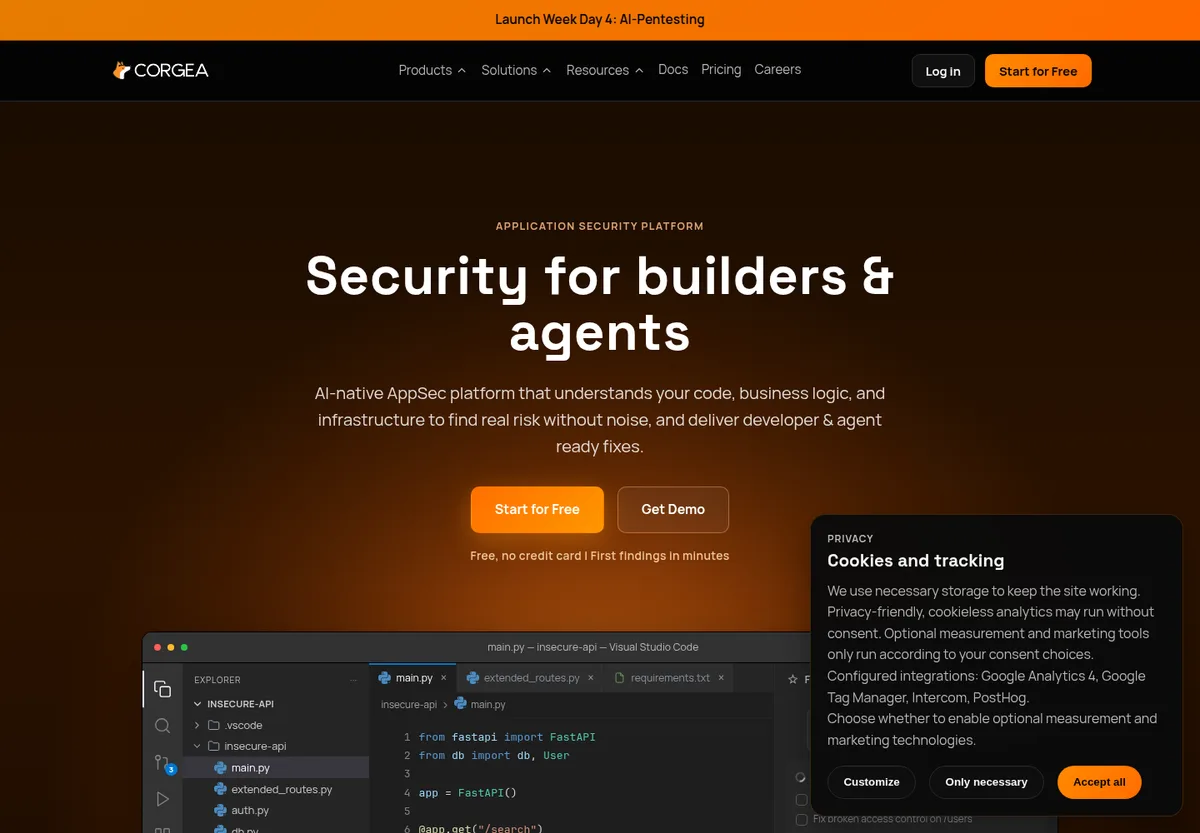
Corgea is an AI-native application security platform that finds exploitable vulnerabilities and helps fix them, with autonomous AI pentesting as a first-class capability.
What it is: AI-native SAST for custom code, with broader AppSec coverage across dependencies, secrets, containers, and IaC, plus autonomous AI pentesting.
Why teams choose it over depthfirst: Both emphasize autonomous, AI-driven security. Corgea combines static analysis, code context, framework understanding, reachability, and LLM-based reasoning to detect business-logic and authorization flaws, then proposes review-ready fixes. For buyers wary of a very new entrant, Corgea offers a clear path to pilot and measure results on your own repositories.
Where it falls short: Corgea is a newer vendor than legacy enterprise SAST platforms. If your procurement depends on decades of tenure, plan a structured proof of value with internal evidence.
Best fit: Teams that want AI-native detection, reachability-aware prioritization, review-ready fixes, and autonomous pentesting they can evaluate now.
Pricing note: Corgea offers a free trial and quote-based plans. See the pricing page.
2. Snyk
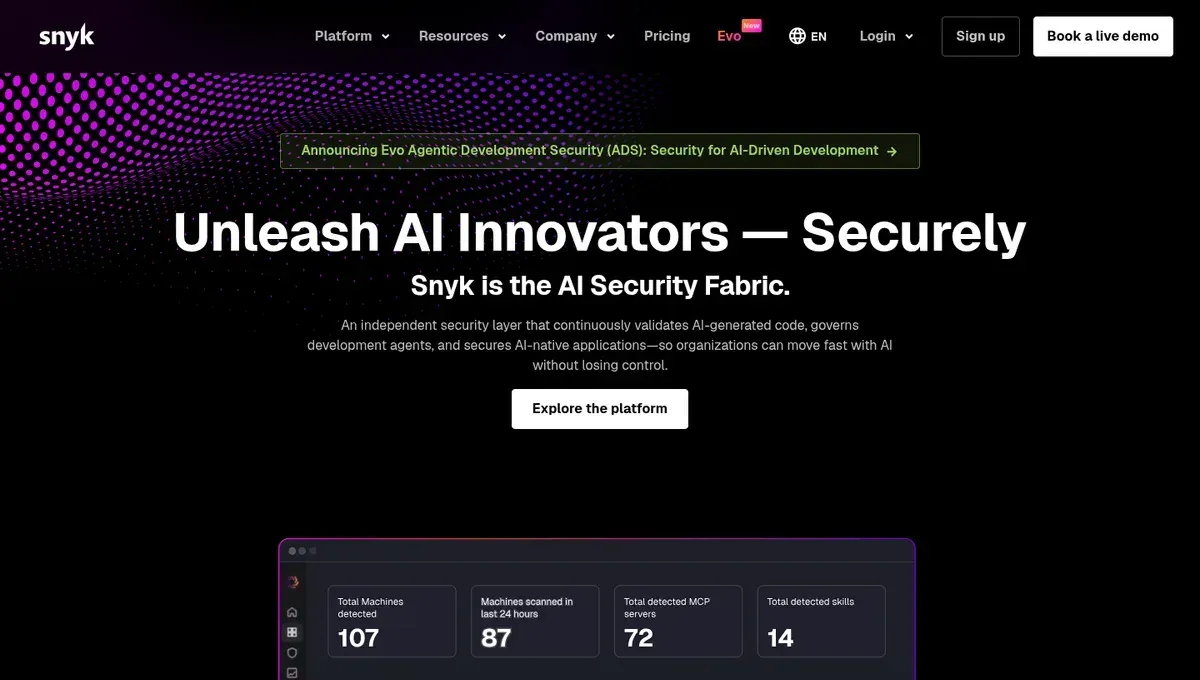
Snyk is a developer-first security platform with software composition analysis and Snyk Code for SAST.
Why teams choose it over depthfirst: A mature, widely adopted developer platform is lower risk for teams that want proven SCA and SAST today. See the Snyk alternatives guide.
Where it falls short: Snyk is SCA-led, and cost can grow with the platform.
Best fit: Teams centered on developer-first dependency security.
Pricing note: Free and paid tiers, with enterprise pricing quote-based.
3. Semgrep
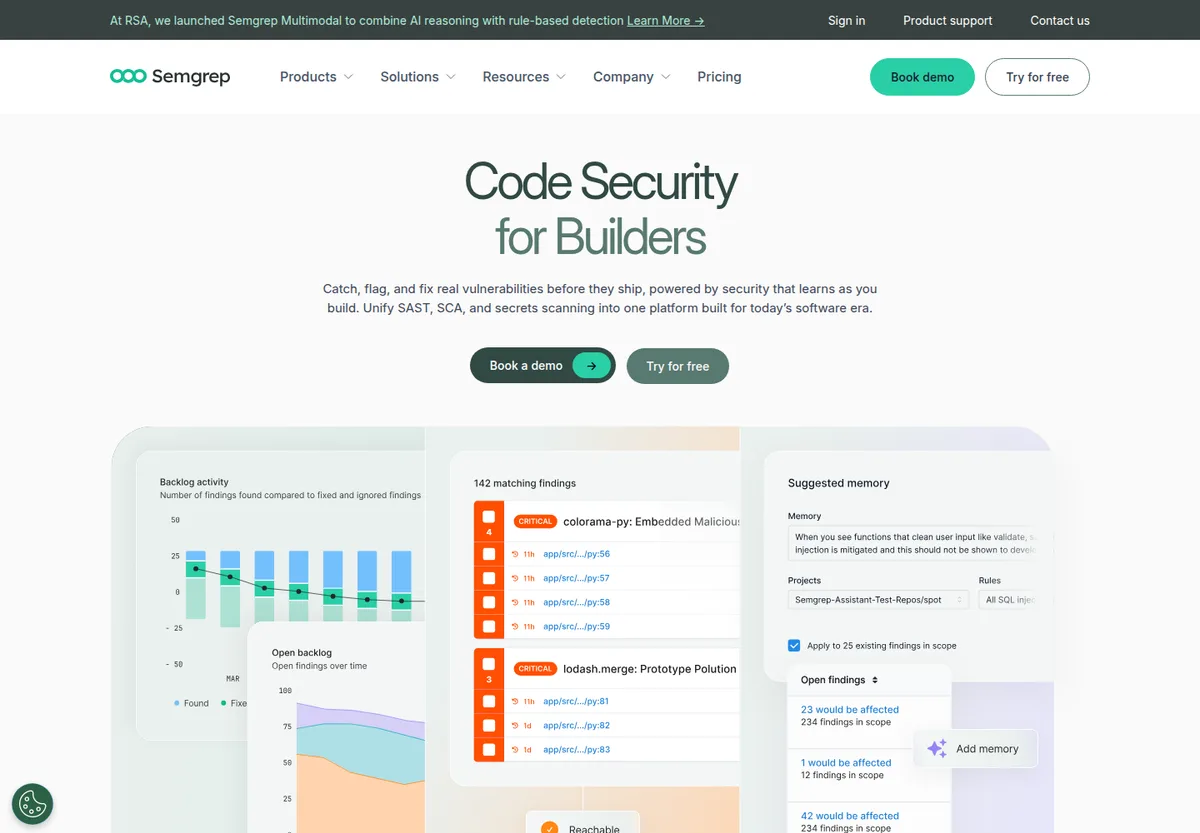
Semgrep is a developer-friendly static analysis platform with open-source rule control.
Why teams choose it over depthfirst: Transparent, customizable detection is a lower-risk, proven option for code-first teams. See the Semgrep alternatives guide.
Where it falls short: Pattern-first detection can miss business-logic flaws, and custom rules need maintenance.
Best fit: Teams that value open-source rule control.
Pricing note: Free open-source engine plus paid tiers.
4. Checkmarx
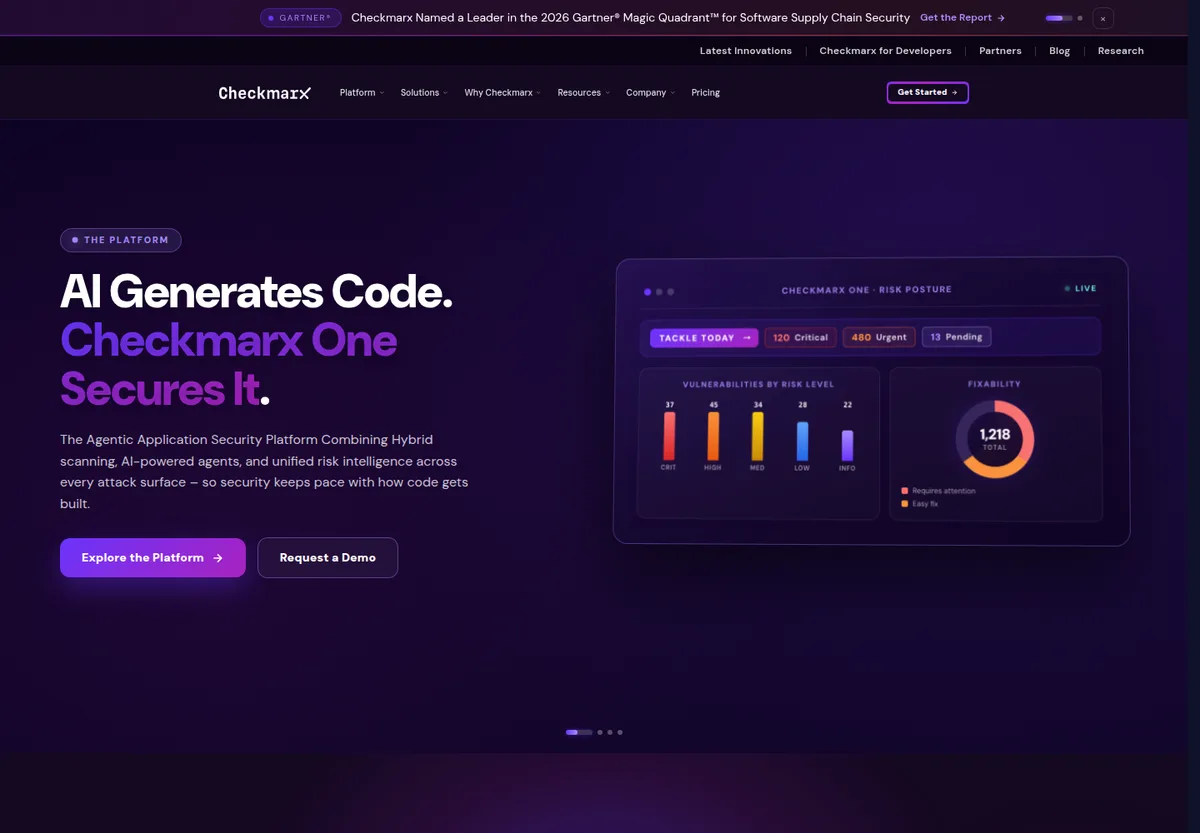
Checkmarx is a long-running enterprise AppSec vendor with SAST, SCA, IaC, and API security.
Why teams choose it over depthfirst: Enterprises that need mature governance and established procurement prefer a proven platform over a new entrant. See the Checkmarx alternatives guide.
Where it falls short: Setup and operational ownership are heavier, and pricing is not publicly listed.
Best fit: Large security teams needing governance and reporting.
Pricing note: Enterprise quote. Pricing is not publicly listed.
5. Aikido
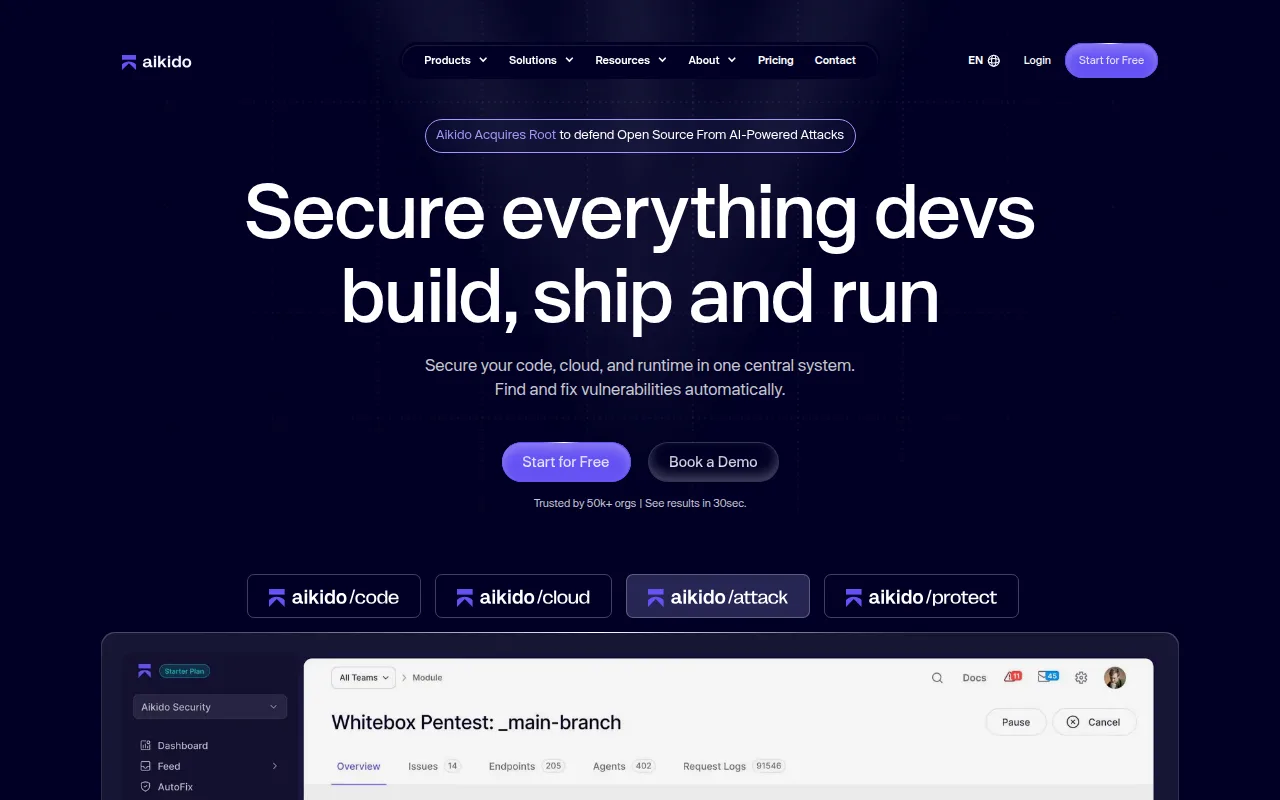
Aikido is an all-in-one security platform that secures code, cloud, and runtime with automated fixes.
Why teams choose it over depthfirst: Teams that want broad coverage and transparent, self-serve pricing shortlist Aikido. See the Aikido alternatives guide.
Where it falls short: All-in-one breadth can mean less depth in specific areas.
Best fit: Teams that want broad coverage with public pricing.
Pricing note: Public tiers including a free tier, with quotes for larger plans.
6. Endor Labs
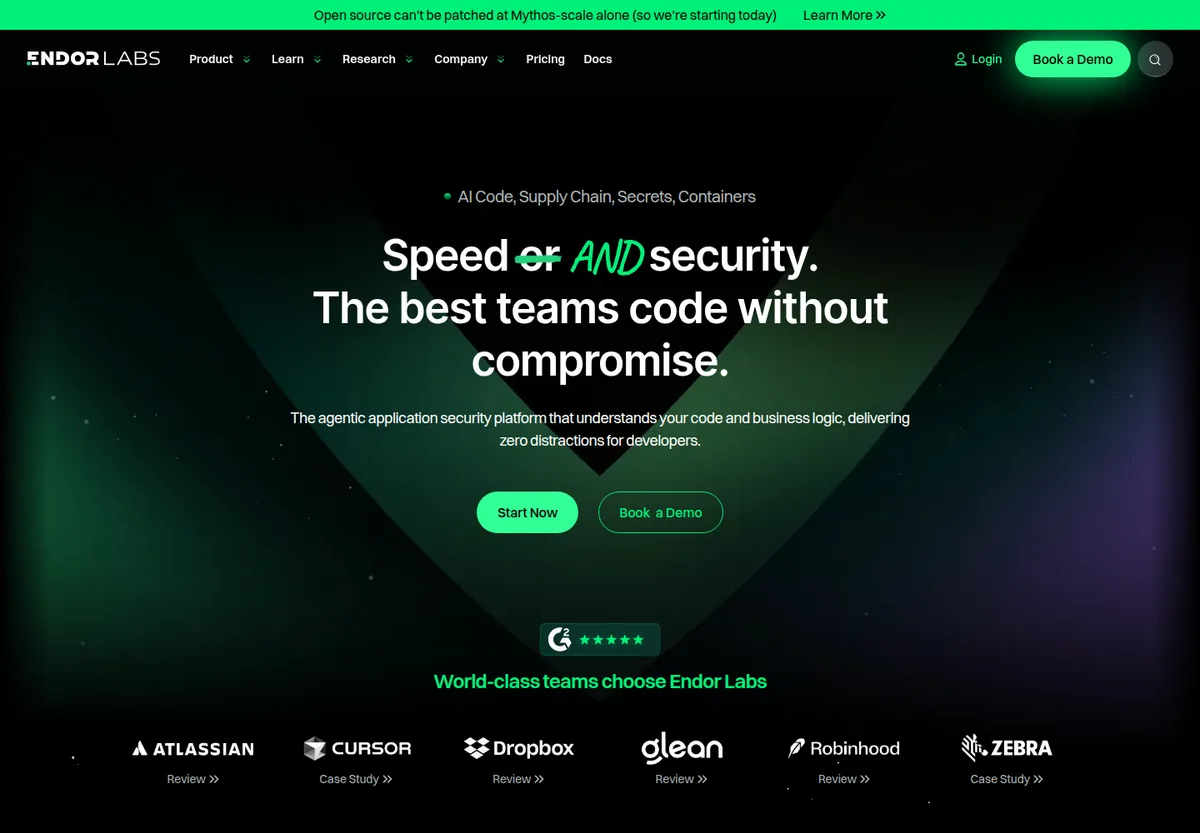
Endor Labs is best known for reachability-based software composition analysis with expanding code security.
Why teams choose it over depthfirst: Teams focused on open-source risk and reachability find its prioritization compelling and proven.
Where it falls short: Its SAST is newer than its SCA reputation.
Best fit: Teams focused on dependency risk and reachability.
Pricing note: Enterprise quote. Pricing is not publicly listed.
7. Veracode
Veracode is an enterprise application security platform with policy-driven SAST and remediation.
Why teams choose it over depthfirst: Compliance-led programs prefer a proven platform with established reporting and Veracode Fix.
Where it falls short: The platform can feel heavy for lean teams.
Best fit: Compliance-led security programs.
Pricing note: Enterprise quote. Pricing is not publicly listed.
8. GitHub Advanced Security
GitHub Advanced Security uses CodeQL for code scanning plus native secret scanning and Copilot Autofix.
Why teams choose it over depthfirst: GitHub-native teams get proven code scanning inside existing workflows.
Where it falls short: It is less natural outside GitHub, and it does not offer autonomous pentesting.
Best fit: Teams standardized on GitHub.
Pricing note: Per active committer for private repositories, free for public repositories.
9. Wiz Code
Wiz Code is the code security offering within the Wiz cloud security platform, focused on code-to-cloud context.
Why teams choose it over depthfirst: Organizations already running Wiz for cloud security may extend it into code with proven cloud context.
Where it falls short: Based on public positioning, code SAST depth is secondary to cloud security strength.
Best fit: Cloud-centric teams that want code-to-cloud correlation.
Pricing note: Enterprise quote. Pricing is not publicly listed.
10. OX Security
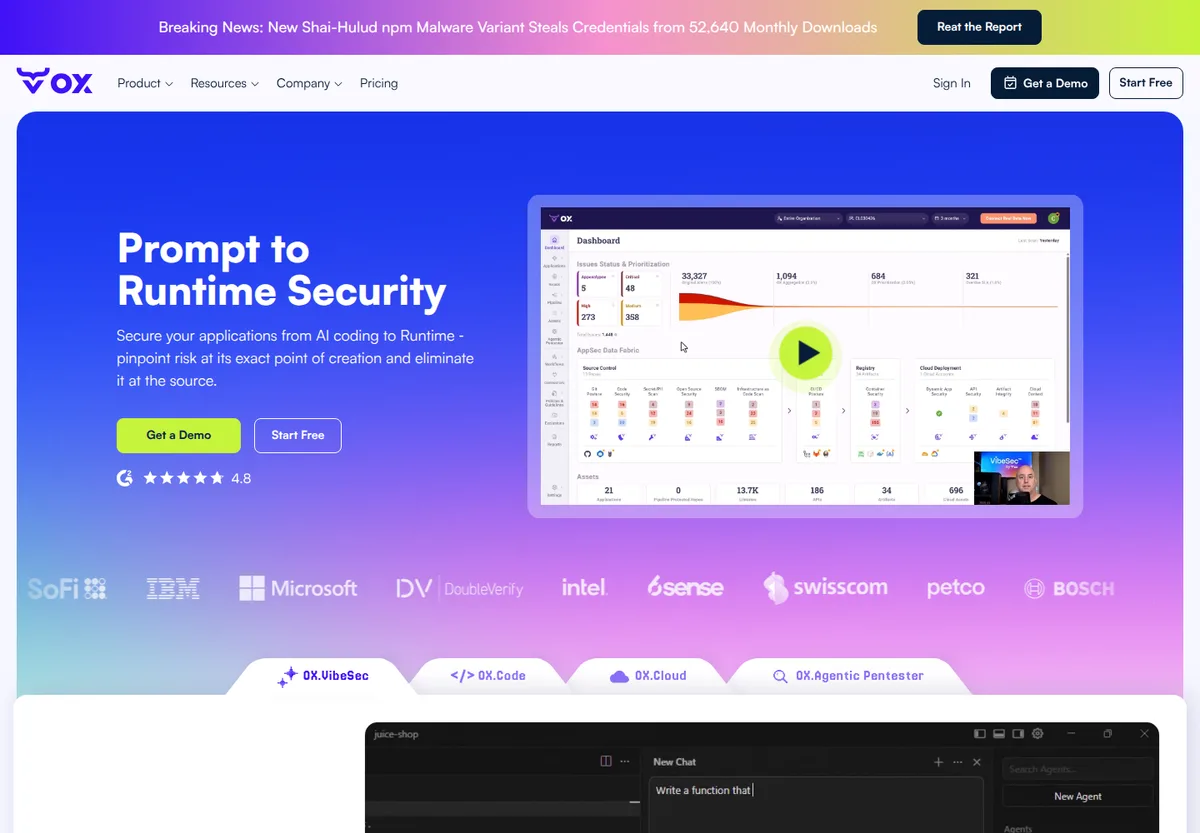
OX Security positions around application security posture management (ASPM) and risk consolidation.
Why teams choose it over depthfirst: Buyers consolidating many scanners want one proven operating layer for posture and prioritization.
Where it falls short: If you want a single scanner rather than a posture platform, ASPM breadth can add complexity.
Best fit: Security leaders consolidating AppSec signals into one program view.
Pricing note: Enterprise quote. Pricing is not publicly listed.
When to stay with depthfirst
A fair comparison acknowledges where depthfirst may be the right choice. Consider depthfirst if:
- Its autonomous security agent model maps closely to how you want AppSec to run.
- You are comfortable partnering with a newer vendor and running a hands-on proof of value.
- Your team specifically wants agents that reason across code, infrastructure, dependencies, and runtime in one motion.
- You have validated depthfirst’s detection and fix quality on your own code and known issues.
- The vendor’s roadmap, support, and data handling meet your requirements.
If those points describe your program, depthfirst may fit. Either way, the right move is a structured pilot with clear success metrics.
How to choose a depthfirst alternative
Use a decision framework rather than a headline.
- Choose Corgea if you want AI-native AppSec, reachability-aware prioritization, review-ready fixes, and autonomous AI pentesting you can pilot now.
- Choose depthfirst if its autonomous agent model is the exact fit and you are comfortable evaluating a newer entrant.
- Choose Semgrep or OpenGrep if custom rules and open-source control matter most.
- Choose Checkmarx or Veracode if analyst recognition and legacy enterprise procurement matter most.
- Choose Snyk if developer-first SCA is the center of gravity.
- Choose Aikido if all-in-one breadth and transparent pricing matter most.
Then run a real bake-off. The best SAST tools guide explains how to design one, and the application security testing complete guide covers where SAST fits alongside SCA, secrets, IaC, and container scanning. Score confirmed true positives, false positives, missed known issues, coverage, fix acceptance, developer friction, and total cost, not headline claims.
Related AppSec tool comparisons
- Best Snyk alternatives
- Best Semgrep alternatives
- Best Checkmarx alternatives
- Best Aikido alternatives
- Best SAST tools in 2026
Frequently asked questions about depthfirst alternatives
What is the best depthfirst alternative in 2026?
There is no single best depthfirst alternative for every team. Corgea is a strong fit when you want AI-native detection, reachability-aware prioritization, review-ready fixes, and autonomous AI pentesting from a platform you can pilot on your own code today. Snyk suits developer-first SCA, Checkmarx and Veracode fit enterprise governance, and Aikido suits all-in-one coverage. Validate on your own repositories first.
Is Corgea a depthfirst alternative?
Yes. Corgea is an AI-native application security platform that competes with depthfirst on autonomous, AI-driven code security. Corgea finds exploitable vulnerabilities, prioritizes them with reachability, and generates review-ready fixes, and it also offers autonomous AI pentesting. Teams evaluate Corgea against depthfirst when they want a proven pilot and clear evidence on their own code.
What is the difference between depthfirst and Corgea?
depthfirst positions around autonomous security agents that reason across code, infrastructure, dependencies, and runtime. Corgea is AI-native and focused on finding exploitable code risk, reachability-aware prioritization, review-ready fixes, and autonomous AI pentesting. Based on public positioning, both emphasize autonomous AI security, so buyers should compare detection depth, fix quality, and evidence on their own applications.
How much does depthfirst cost?
depthfirst pricing is not publicly listed at the time of writing, so you will likely need to contact the vendor. If transparent or self-serve pricing matters, compare alternatives such as Aikido, which publishes tiered pricing, or open-source options such as Semgrep and OpenGrep.
Which depthfirst alternative is best for autonomous pentesting?
If autonomous testing is a priority, evaluate Corgea AI pentesting, which pairs agentic security testing with AI-native SAST. Confirm supported application types, scope, and evidence quality during a pilot on your own applications.
Are depthfirst competitors proven on real codebases?
Established tools such as Corgea, Snyk, Semgrep, Checkmarx, and Veracode have broad public adoption and can be piloted on your own repositories. For any newer autonomous AppSec vendor, run a structured proof of value and score results against known historical vulnerabilities and seeded issues.
How should teams evaluate depthfirst competitors?
Evaluate depthfirst competitors on your own code and applications. Measure confirmed true positives, false positives, missed known issues, coverage across code, dependencies, secrets, and infrastructure, fix acceptance rate, developer workflow friction, and total cost of ownership rather than headline claims.
The bottom line on depthfirst alternatives
depthfirst has an ambitious autonomous security vision, and it is worth watching as the category matures. If your team is comparing depthfirst alternatives because you need proven, AI-native detection, fewer false positives, faster remediation, review-ready fixes, and autonomous pentesting you can pilot today, book a Corgea demo. You can also explore Corgea AI SAST, autonomous AI pentesting, and current pricing.
Corgea is not affiliated with depthfirst. This comparison is based on public information and product positioning.