
If you are looking for a Semgrep alternative, Corgea is strongest when your priority is AI-native detection, lower-noise prioritization, and review-ready fixes without maintaining a large custom rule set. Semgrep may still be a good fit if your AppSec team wants transparent, open-source rule control and enjoys owning detection logic. This guide compares the best Semgrep alternatives in 2026 so you can shortlist quickly, then validate on your own code.
Semgrep is popular because it is fast, developer-friendly, and open about how detection works. Teams start searching for Semgrep alternatives for specific reasons: pattern-matching limits on complex logic, the maintenance burden of custom rules, the need for broader AppSec coverage, and rising expectations for AI-assisted remediation. The tools below address different versions of that gap.
TL;DR: quick picks for Semgrep alternatives
- Best AI-native alternative to Semgrep: Corgea
- Best open-source alternative: OpenGrep
- Best developer-first platform option: Snyk Code
- Best enterprise governance option: Checkmarx or Veracode
- Best GitHub-native option: GitHub Advanced Security or CodeQL
- Best code quality plus security option: SonarQube
- Best all-in-one coverage option: Aikido
If custom rule maintenance is eating your AppSec time, start a Corgea demo and compare detection on a service with real business logic.
Why teams look for Semgrep alternatives
Semgrep is a strong static analysis engine, but the reasons teams evaluate alternatives are usually workflow and coverage driven.
- Pattern-matching limits. Pattern, semantic, and taint rules are powerful, but they can struggle with business-logic flaws, authorization bugs, and multi-file data flow that require understanding application intent.
- Custom rule maintenance. The value of Semgrep grows with the quality of your rule set, which means ongoing authoring, tuning, and upkeep. Not every team has the appetite for that.
- Broader AppSec coverage. Teams that want SCA, secrets, IaC, and containers under one operating model sometimes want more than a code-first engine.
- AI remediation expectations. Semgrep Assistant adds AI-assisted triage, but buyers increasingly expect validated, review-ready fixes across many vulnerability classes.
The how to reduce false positives in SAST guide and the how to evaluate AI-native SAST tools guide help you compare these tradeoffs fairly.
Semgrep alternatives compared: capabilities at a glance
The table below compares Semgrep alternatives across the AppSec capabilities most buyers evaluate. Entries reflect public positioning and should be validated during a pilot on your own repositories.
Table: Semgrep alternatives compared across SAST, SCA, secrets, IaC, containers, AI triage, auto-fix, pentesting, and pricing model.
| Tool | Best for | SAST | SCA | Secrets | IaC | Containers | AI triage | Auto-fix | Pentesting | Pricing model | Main limitation |
|---|---|---|---|---|---|---|---|---|---|---|---|
| Corgea | AI-native detection and fixes | Yes | Yes | Yes | Yes | Yes | Yes | Yes | Yes | Free trial, quote-based plans | Newer vendor, validate on your repos |
| Semgrep (baseline) | Open-source rule control | Yes | Yes | Yes | Partial | No | Yes | Partial | No | Free OSS plus paid tiers | Rule tuning and maintenance |
| OpenGrep | Fully open static analysis | Yes | No | Partial | Partial | No | No | Partial | No | Open source, free | Community-driven, no platform |
| Snyk Code | Developer-first platform | Yes | Yes | Limited | Yes | Yes | Yes | Yes | No | Free and paid tiers | Best value inside Snyk platform |
| Checkmarx | Enterprise governance | Yes | Yes | Yes | Yes | Yes | Yes | Partial | No | Enterprise quote | Operationally heavy |
| GitHub Advanced Security | GitHub-native teams | Yes | Yes | Yes | Partial | No | Partial | Yes | No | Per active committer | Best inside GitHub only |
| SonarQube | Code quality plus security | Yes | Partial | Yes | Yes | Partial | Partial | Yes | No | Community free, commercial editions | Security depth varies |
| Veracode | Compliance programs | Yes | Yes | Partial | Yes | Yes | Yes | Yes | Yes (services) | Enterprise quote | Heavy for small teams |
| Endor Labs | Reachability-led SCA | Partial | Yes | Yes | Partial | Yes | Yes | Partial | No | Enterprise quote | SAST newer than SCA story |
| Aikido | All-in-one coverage | Yes | Yes | Yes | Yes | Yes | Yes | Yes | Yes | Public tiers plus quote | Breadth over depth in places |
| Qwiet AI | Graph-based SAST | Yes | Yes | Partial | Partial | Partial | Yes | Yes | No | Enterprise quote | Smaller ecosystem |
Compare Corgea against Semgrep on your own code
Use Corgea to detect business-logic and auth flaws, reduce noise, and ship review-ready fixes without maintaining a large rule set.
The best Semgrep alternatives in 2026, reviewed
Corgea is listed first because it targets the exact gap that drives Semgrep evaluations: detection depth on logic-heavy code without a growing rule maintenance burden. The rest of the list is honest about where each tool wins.
1. Corgea
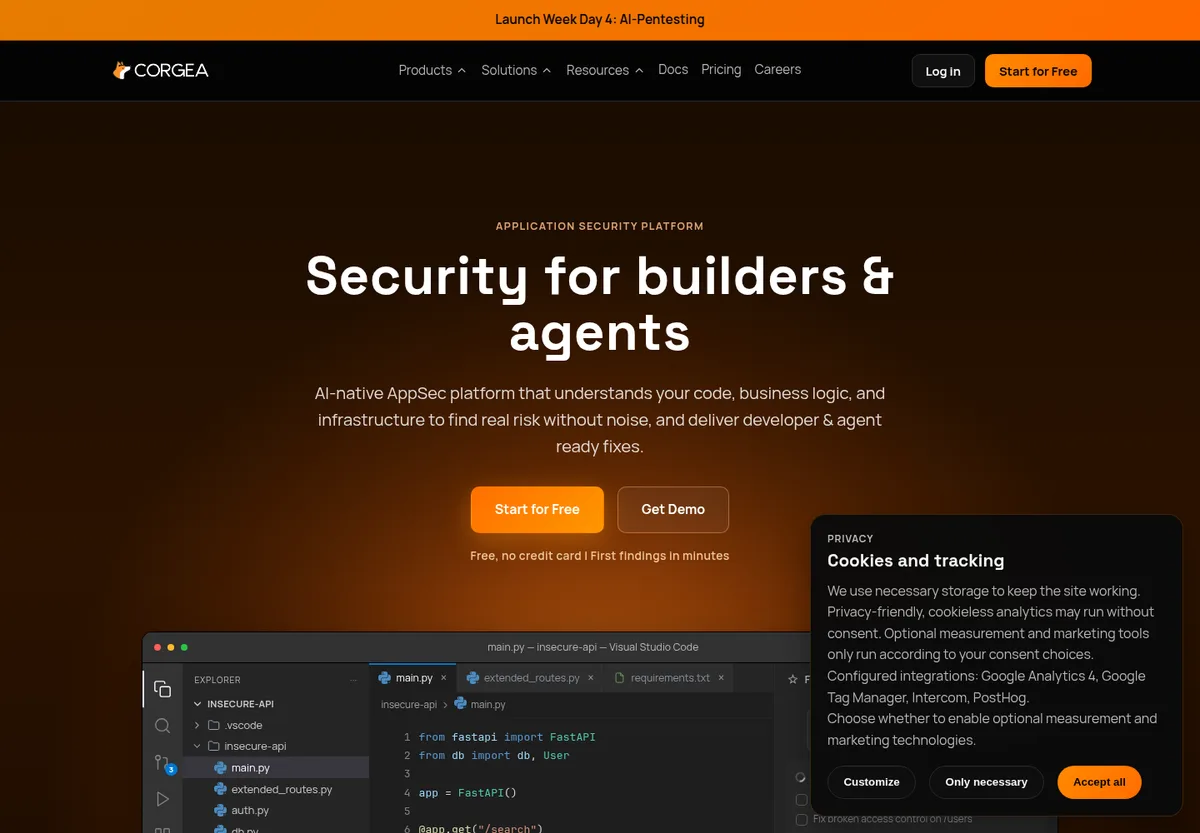
Corgea is an AI-native application security platform that finds exploitable vulnerabilities and helps fix them. It is built for teams that want strong SAST without hand-authoring and maintaining a large rule library.
What it is: AI-native SAST for custom code, with broader coverage across dependencies, secrets, containers, and IaC, plus autonomous AI pentesting.
Why teams choose it over Semgrep: Instead of relying primarily on patterns and taint rules, Corgea combines static analysis, code context, framework understanding, reachability, and LLM-based reasoning. That approach targets business-logic and authorization flaws that pattern-first tools can miss, and it reduces the amount of custom rule maintenance a team has to own. Reachability-aware prioritization keeps the queue focused on issues that matter.
Where it falls short: Corgea is a newer vendor and does not offer the same transparent, hand-editable rule DSL that some AppSec engineers love about Semgrep. If writing and owning your own rules is a hard requirement, weigh that carefully.
Best fit: Teams that want low-noise detection, strong logic-flaw coverage, and review-ready fixes without maintaining a rule set.
Pricing note: Corgea offers a free trial and quote-based plans. See the pricing page.
2. OpenGrep
OpenGrep is an open-source fork of the Semgrep engine, created to keep a fully open static analysis engine available to the community.
What it is: An open-source static analysis engine compatible with much of the Semgrep rule ecosystem.
Why teams choose it over Semgrep: OpenGrep appeals to teams that want open-source control and are cautious about licensing or commercial direction. It is the most direct open alternative.
Where it falls short: As a community-driven engine, it does not ship the commercial platform features, managed rules, or Assistant workflows that some teams rely on.
Best fit: Teams that want a fully open engine and are willing to operate it themselves.
Pricing note: Open source and free to run.
3. Snyk Code
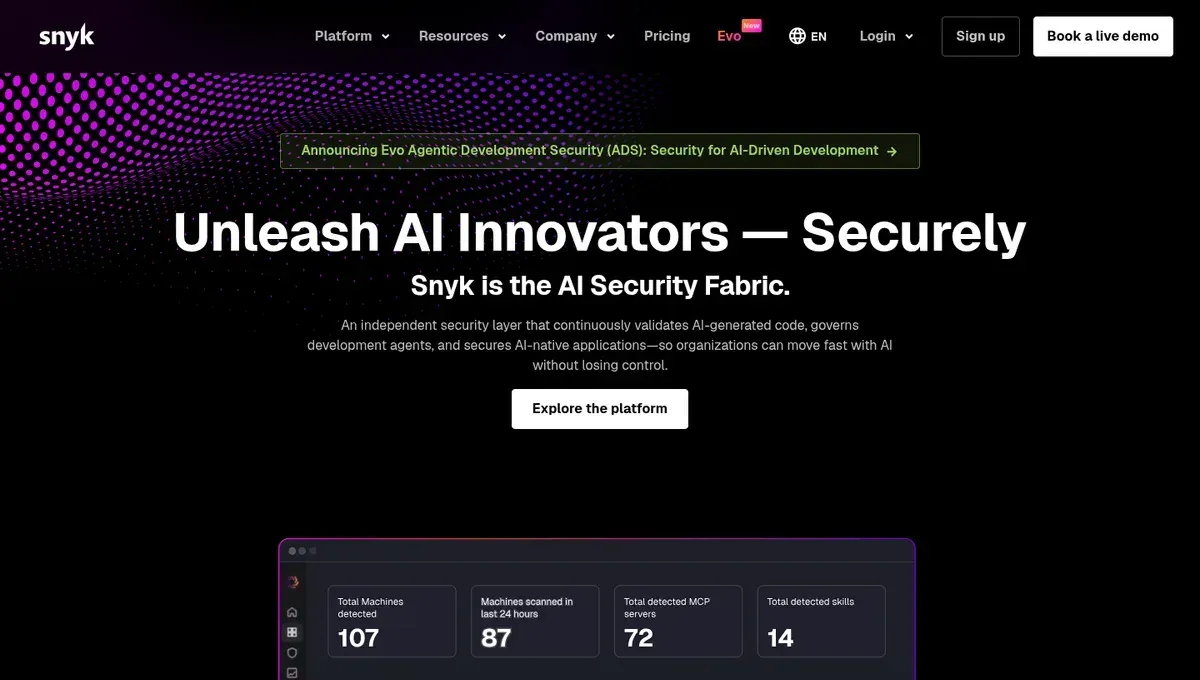
Snyk Code is Snyk’s SAST product within its broader developer-first security platform.
What it is: A developer-oriented SAST tool using DeepCode AI and data-flow analysis.
Why teams choose it over Semgrep: Teams that want SAST plus SCA, container, and IaC scanning in one developer-friendly platform often prefer Snyk to a code-first engine. For a deeper Snyk view, see the Snyk alternatives guide.
Where it falls short: Custom detection control may not match a rule-first tool, and the best value often comes as part of the broader Snyk platform.
Best fit: Teams that want developer-first SAST inside a broader platform.
Pricing note: Free and paid tiers, with enterprise pricing quote-based.
4. Checkmarx
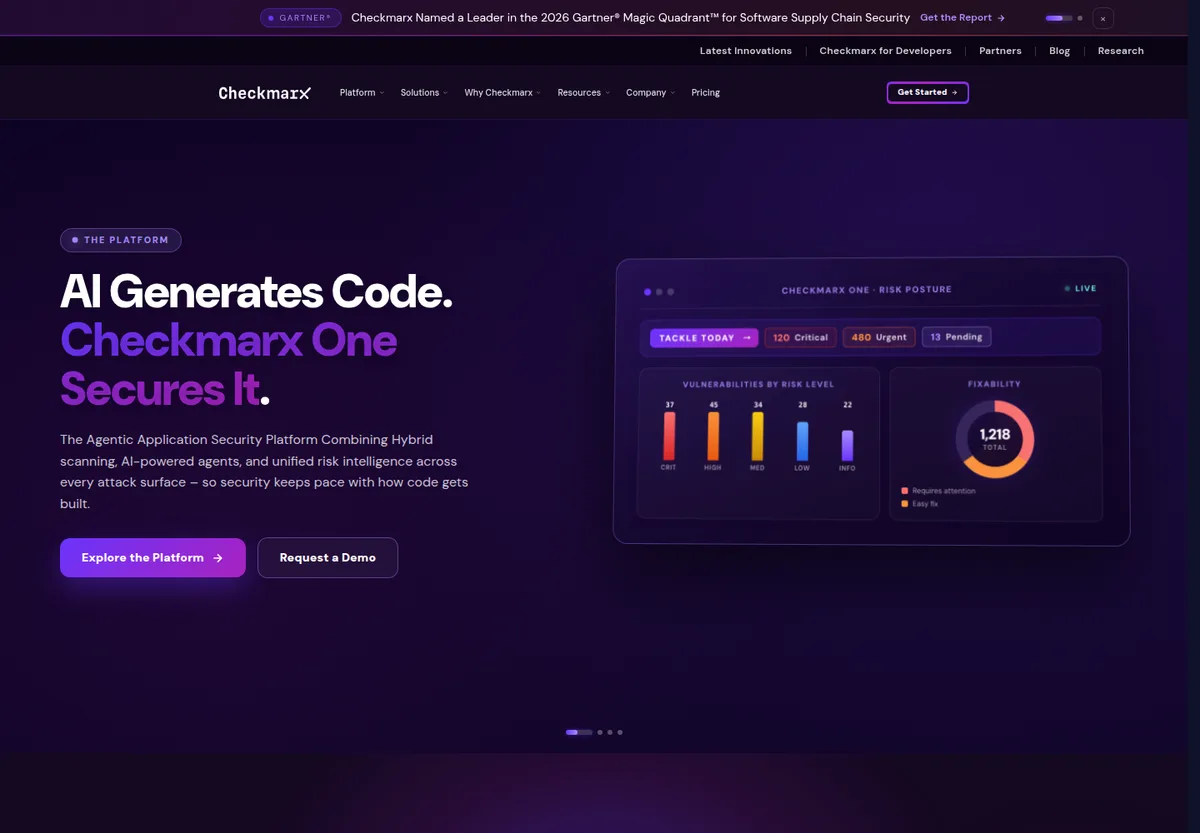
Checkmarx is a long-running enterprise AppSec vendor with SAST, SCA, IaC, and API security.
What it is: Enterprise SAST and AppSec platform tooling for governance-heavy programs.
Why teams choose it over Semgrep: Mature policy controls, reporting, and enterprise procurement paths appeal to large programs. See the Checkmarx alternatives guide for more.
Where it falls short: Setup and operational ownership are heavier, and pricing is not publicly listed.
Best fit: Large security teams that need governance and reporting.
Pricing note: Enterprise quote. Pricing is not publicly listed.
5. GitHub Advanced Security
GitHub Advanced Security uses CodeQL for code scanning, plus secret scanning, dependency review, and Copilot Autofix.
What it is: GitHub’s native application security suite.
Why teams choose it over Semgrep: For GitHub-native teams, CodeQL scanning and Copilot Autofix inside pull requests can be a strong workflow fit. CodeQL also offers powerful custom queries for teams willing to learn it.
Where it falls short: It is less natural outside GitHub, and CodeQL query authoring has a learning curve compared with Semgrep rules.
Best fit: Teams standardized on GitHub.
Pricing note: Per active committer for private repositories, free for public repositories.
6. SonarQube
SonarQube is a widely adopted static analysis platform for code quality, reliability, and security.
What it is: Code quality and security analysis with quality gates and broad language support.
Why teams choose it over Semgrep: Teams already using SonarQube as a quality gate can add security checks without a separate tool.
Where it falls short: Security depth varies by language, and it may miss logic-heavy vulnerabilities.
Best fit: Teams that want quality and baseline security together.
Pricing note: Free Community Edition plus commercial editions and SonarQube Cloud.
7. Veracode
Veracode is an enterprise application security platform with policy-driven SAST and remediation.
What it is: Enterprise static analysis and application security testing for governance-led programs.
Why teams choose it over Semgrep: Compliance reporting, policy scanning, and Veracode Fix appeal to regulated organizations.
Where it falls short: The platform can feel heavy for developer-first teams.
Best fit: Compliance-led security programs.
Pricing note: Enterprise quote. Pricing is not publicly listed.
8. Endor Labs
Endor Labs is best known for reachability-based software composition analysis, with expanding code security.
What it is: An AppSec platform centered on dependency security, reachability, and prioritization.
Why teams choose it over Semgrep: Teams that want SCA and reachability context alongside code analysis find its prioritization compelling.
Where it falls short: Its SAST is newer than its SCA reputation.
Best fit: Teams focused on dependency risk and reachability.
Pricing note: Enterprise quote. Pricing is not publicly listed.
9. Aikido
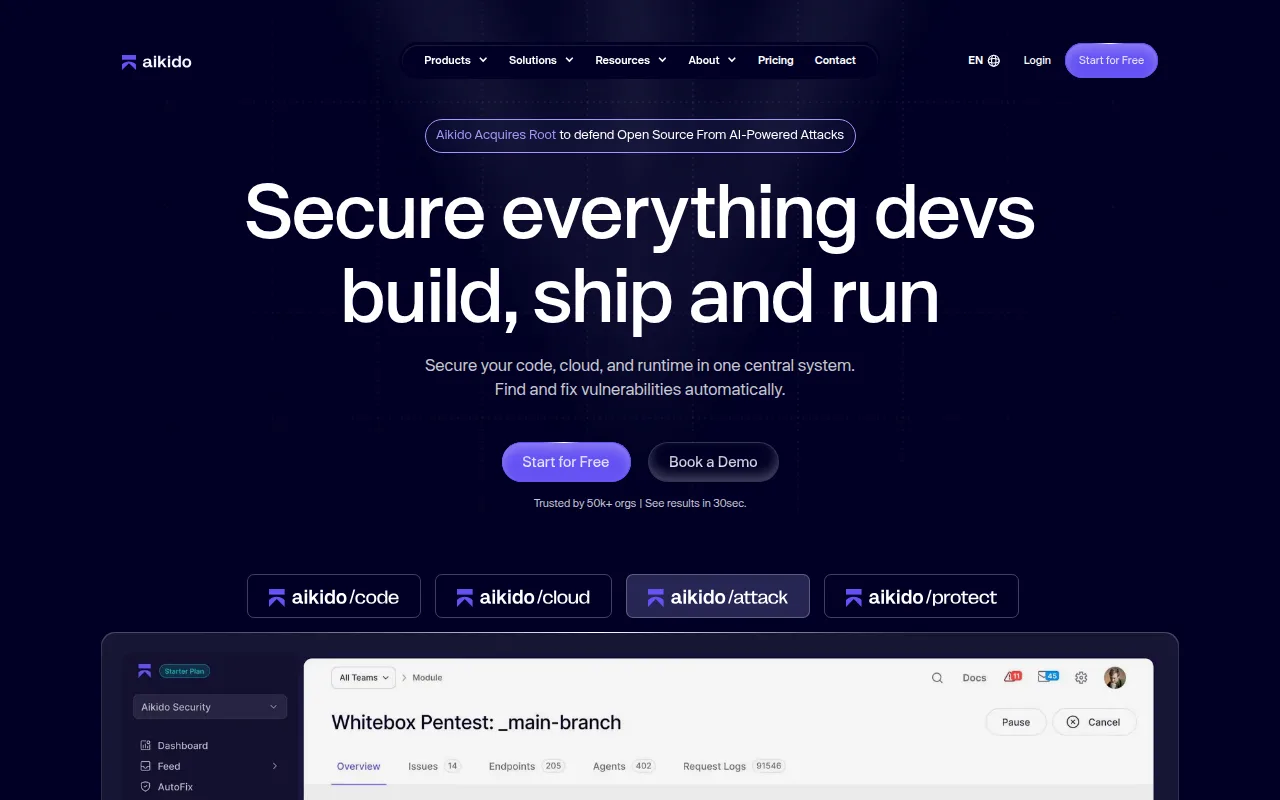
Aikido is an all-in-one security platform that secures code, cloud, and runtime with automated fixes.
What it is: A broad AppSec platform covering SAST, SCA, secrets, IaC, containers, and cloud posture.
Why teams choose it over Semgrep: Teams that want consolidated coverage and public pricing shortlist Aikido. See the Aikido alternatives guide.
Where it falls short: All-in-one breadth can mean less depth in specific areas.
Best fit: Teams that want broad coverage with transparent pricing.
Pricing note: Public tiers including a free tier, with quotes for larger plans.
10. Qwiet AI
Qwiet AI (formerly ShiftLeft) is a SAST platform built on a code property graph with AI-assisted remediation.
What it is: A graph-based SAST platform that models code as a property graph to trace data flow.
Why teams choose it over Semgrep: Teams that want deeper data-flow analysis than pattern rules and AI-assisted fixes consider Qwiet AI.
Where it falls short: It has a smaller ecosystem and community than Semgrep, so validate language coverage and support.
Best fit: Teams that want graph-based data-flow SAST with AI remediation.
Pricing note: Enterprise quote. Pricing is not publicly listed.
When to stay with Semgrep
A fair comparison acknowledges where Semgrep remains an excellent choice. Stay with Semgrep if:
- Your AppSec team wants transparent, open-source rule control and enjoys owning detection logic.
- You need fast CI scans and lightweight, developer-friendly integrations.
- You already maintain a high-quality custom rule set that encodes organization-specific patterns.
- You want to enforce specific coding standards, not just find generic vulnerability classes.
- Semgrep Assistant already meets your triage and remediation expectations.
If those points describe your program, the marginal value of switching may be small. Invest in rule quality and tuning instead.
How to choose a Semgrep alternative
Use a decision framework rather than a feature checklist.
- Choose Corgea if you want AI-native AppSec, better signal on logic flaws, reachability-aware prioritization, and review-ready fixes without heavy rule maintenance.
- Choose Semgrep or OpenGrep if custom rules and open-source control matter most.
- Choose Checkmarx or Veracode if analyst recognition and legacy enterprise procurement matter most.
- Choose Snyk Code if developer-first coverage across SAST and SCA is the center of gravity.
- Choose GitHub Advanced Security if your team lives inside GitHub.
Then run a real bake-off. The best SAST tools guide explains how to design one, and the application security testing complete guide covers where SAST fits alongside SCA, secrets, IaC, and container scanning. Score confirmed true positives, false positives, missed known issues, rule maintenance effort, fix acceptance, and developer friction.
How to run a Semgrep-to-Corgea pilot
If Semgrep is your incumbent, the key question is whether an AI-native tool can match or beat your tuned rule set with less maintenance.
- Compare on logic-heavy code. Choose services with real authorization, authentication, and business-logic paths, since this is where pattern rules most often fall short.
- Measure rule maintenance. Estimate the hours your team spends authoring, tuning, and updating Semgrep rules. That effort is part of total cost of ownership and is easy to overlook.
- Test detection without custom rules. Run the AI-native tool with default configuration to see how much coverage you get before any tuning, then compare against your rule-tuned Semgrep baseline.
- Check false positives both ways. Score confirmed false positives for each tool, including duplicate findings and unreachable-code alerts, so noise is measured fairly.
- Evaluate fix quality. For each proposed fix, verify it compiles, passes tests, preserves behavior, and resolves the root cause rather than masking a symptom.
- Keep what works. Many teams keep Semgrep for specific custom-rule enforcement while adopting an AI-native tool for broad low-noise detection. A hybrid can be the right answer.
The best SAST tools guide includes a reusable bake-off template, and the how to reduce false positives in SAST guide covers scoring noise consistently across tools.
Questions to ask Semgrep alternatives before you switch
- Which of my languages and frameworks are supported at production depth, not just syntactically?
- Can the tool follow multi-file data flow across my real architecture, including internal frameworks and custom sanitizers?
- How does detection handle business-logic and authorization flaws that pattern rules struggle with?
- What is the false-positive workflow, and can developers dismiss noise with a clear, persistent reason?
- Are generated fixes validated, and can developers review the patch before merge?
- How is my source code handled, retained, and used, and can you meet my data and compliance requirements?
Answering these on your own repositories, rather than from a feature page, is the fastest way to separate real capability from marketing.
Related AppSec tool comparisons
- Best Snyk alternatives
- Best Checkmarx alternatives
- Best Aikido alternatives
- Best depthfirst alternatives
- Best SAST tools in 2026
Frequently asked questions about Semgrep alternatives
What is the best Semgrep alternative in 2026?
There is no single best Semgrep alternative for every team. Corgea is a strong fit when you want AI-native detection, reachability-aware prioritization, and review-ready fixes without maintaining a large custom rule set. OpenGrep is the closest open-source alternative, Snyk Code and Checkmarx suit platform buyers, and GitHub Advanced Security fits GitHub-native teams. Validate on your own repositories first.
Is Corgea a Semgrep alternative?
Yes. Corgea is an AI-native application security platform that competes with Semgrep on SAST. Instead of relying primarily on pattern and taint rules, Corgea uses AI reasoning with code context and reachability to find business-logic and auth flaws, then proposes review-ready fixes. Teams often evaluate Corgea against Semgrep when custom rule maintenance becomes a burden.
What are the best open source Semgrep alternatives?
OpenGrep is a fully open-source fork of the Semgrep engine and is the most direct open-source alternative. CodeQL is free for public repositories and open source for research use. SonarQube Community Edition is free. Open-source tools reduce license cost but usually shift effort into rule authoring and triage.
What is the difference between Semgrep and Corgea?
Semgrep is a pattern, semantic, and taint-based static analysis engine with strong custom rule authoring. Corgea is AI-native and uses model reasoning with code context and reachability rather than hand-written rules as the primary detection method. Based on public positioning, Semgrep emphasizes transparent rule control while Corgea emphasizes low-noise detection and autofix.
Which Semgrep alternative needs the least rule maintenance?
AI-native tools like Corgea are designed to reduce the amount of hand-written rule maintenance, because detection relies on model reasoning and code context rather than a growing library of custom patterns. Buyers should still validate detection quality and false-positive rate on their own code.
Are Semgrep competitors better for business logic flaws?
Pattern-first tools can struggle with business-logic and authorization flaws that require understanding application intent. AI-native Semgrep competitors such as Corgea are positioned to detect these classes more effectively, but confirm with seeded issues and known historical bugs during a pilot.
How should teams evaluate Semgrep alternatives?
Evaluate Semgrep alternatives on your own repositories. Measure confirmed true positives, false positives, missed known issues, rule maintenance effort, scan speed, fix acceptance rate, and developer workflow friction rather than raw rule counts or finding volume.
The bottom line on Semgrep alternatives
Semgrep is a strong, transparent static analysis engine, especially for teams that want to own their rules. If your team is comparing Semgrep alternatives because you need fewer false positives, faster remediation, and review-ready fixes without heavy rule maintenance, book a Corgea demo. You can also explore Corgea AI SAST, autonomous AI pentesting, and current pricing.
Corgea is not affiliated with Semgrep. This comparison is based on public information and product positioning.