If you are looking for a Snyk alternative, Corgea is strongest when your priority is AI-native detection, lower-noise prioritization, and review-ready fixes inside the developer workflow. Snyk may still be a good fit if your center of gravity is developer-first software composition analysis and you want dependency, container, and IaC scanning under one familiar platform. This guide compares the 10 best Snyk alternatives in 2026 so an AppSec buyer can shortlist quickly, then validate on real repositories.
Snyk is a well-known developer security platform, and many teams adopt it for open-source dependency scanning first. The reasons buyers start searching for Snyk alternatives are usually specific: pricing that grows with the platform, alert volume that developers stop trusting, SCA-heavy positioning when the real need is custom-code SAST, and a desire for higher-quality auto-fix. The tools below address different versions of that problem. If you want the head-to-head numbers first, our Corgea vs. Snyk SAST benchmark scores both tools on the same 47 confirmed issues.
What changed (August 2026): we corrected the tool count in the title (this guide has always covered 10 tools), rebuilt the comparison table around SAST depth, secrets/IaC, AI triage, auto-fix, and free-tier columns, added the Corgea vs. Snyk benchmark results, added a Snyk-to-Corgea migration section, updated GitHub’s pricing after Advanced Security was split into Code Security and Secret Protection, and refreshed the FAQ.
TL;DR: quick picks for Snyk alternatives
- Best AI-native AppSec alternative to Snyk: Corgea
- Best developer-first SCA option: Snyk (if you stay) or Endor Labs
- Best open or custom-rule SAST option: Semgrep or OpenGrep
- Best enterprise legacy SAST option: Checkmarx or Veracode
- Best all-in-one coverage option: Aikido
- Best GitHub-native option: GitHub Advanced Security
- Best code quality plus security option: SonarQube
If you want the shortest path to fewer false positives and fixes developers actually merge, start a Corgea demo and run it against a noisy repository you already know well, or read the Corgea vs Snyk comparison page for a feature-by-feature view.
Why teams look for Snyk alternatives
Snyk earned its reputation on developer-first software composition analysis, and it remains a capable platform. Teams still evaluate alternatives for a handful of recurring reasons.
- Pricing complexity. Snyk publishes tiered plans with a free option, but costs can climb as you add products, contributors, and enterprise controls. Buyers frequently want a simpler cost model tied to the outcome they care about.
- Broad platform packaging. Snyk spans SCA, SAST, container, and IaC. If your actual need is high-quality custom-code SAST, a broad platform can feel heavier than necessary.
- SCA-heavy perception. Many teams first meet Snyk through dependency scanning. When custom code logic flaws are the priority, some buyers want a tool whose primary strength is code analysis. Our benchmark bears this out: Snyk Code missed 21 of 47 confirmed issues, including missing authorization on data-modifying routes and XML external entity processing.
- Alert volume. As with any scanner, findings only help when developers trust them. Teams look for lower-noise prioritization, reachability context, and clearer evidence.
- Auto-fix expectations. Snyk promotes Agent Fix, but buyers increasingly expect review-ready fixes that are validated against their codebase, not just suggestions.
If those reasons resonate, the how to reduce false positives in SAST guide and the how to evaluate AI-native SAST tools guide will help you structure a fair comparison. New to the category? Start with what is SAST and AI SAST explained.
Snyk alternatives compared: features and pricing at a glance
The table below compares Snyk alternatives across the AppSec capabilities most buyers evaluate. Entries reflect public positioning as of August 2026 and should be validated during a pilot on your own repositories. Competitor pricing is hedged deliberately: where a vendor does not publish list prices, the table says so.
Table: Snyk alternatives compared across SAST depth, SCA, secrets and IaC, AI triage, auto-fix, and pricing model or free tier.
| Tool | Best for | SAST depth | SCA | Secrets / IaC | AI triage | Auto-fix | Pricing model / free tier |
|---|---|---|---|---|---|---|---|
| Corgea | AI-native detection and review-ready fixes | AI-native; business-logic, auth, and reachability-aware | Yes, with reachability | Yes / Yes (plus containers) | Yes | Verified fix PRs, incl. multi-file | Free plan (2 members, 10 repos); per-developer Growth and Scale plans |
| Snyk (baseline) | Developer-first SCA | Snyk Code (semantic, AI-assisted) | Best-in-class | Limited / Yes (plus containers) | Yes | Dependency Fix PRs + Agent Fix | Free tier; published Team pricing per product; Enterprise via sales |
| Semgrep | Open-source rule control | Pattern + dataflow; cross-file taint in paid tiers | Yes (paid) | Yes (paid) / Partial | Semgrep Assistant (paid) | Rule-level autofix | Free Community Edition; paid per contributor; Enterprise quote |
| Checkmarx | Enterprise governance | Deep data-flow with custom queries | Yes | Yes / Yes | Yes | Guided remediation, partial | Enterprise quote, no public pricing |
| Aikido | All-in-one coverage | AI-assisted SAST on open engines | Yes | Yes / Yes (plus CSPM) | Yes | AutoFix suggestions and PRs | Free tier; published per-user tiers; Enterprise quote |
| Endor Labs | Reachability-led SCA | Newer than its SCA | Yes, reachability-first | Yes / Partial | Yes | Partial | Enterprise quote, no public pricing |
| Veracode | Compliance programs | Binary and source SAST, policy-driven | Yes | Partial / Yes | Yes | Veracode Fix suggestions | Enterprise quote, no public pricing |
| GitHub Advanced Security | GitHub-native teams | CodeQL semantic analysis | Dependency review | Secret Protection add-on / Partial | Partial | Copilot Autofix suggestions | Free for public repos; published per-active-committer add-ons |
| SonarQube | Code quality plus security | Quality-first rules; taint analysis in paid editions | Paid editions | Yes / Yes | Partial (AI CodeFix) | Suggestions in dashboard | Community Build free; paid editions priced by lines of code |
| Mend.io | Dependency-first remediation | Secondary to SCA | Yes | Partial / Partial | Yes | Dependency remediation PRs | Enterprise quote, no public pricing |
| OX Security | AppSec posture and ASPM | Aggregates scanners | Yes | Yes / Yes | Yes | Partial | Enterprise quote, no public pricing |
Compare Corgea against Snyk on your own code
Use Corgea to find exploitable code risk, cut noisy findings, and generate review-ready fixes in the developer workflow.
The best Snyk alternatives in 2026, reviewed
Corgea is listed first because it is the AI-native alternative most directly aimed at the pain points that drive Snyk evaluations. The rest of the list is honest about where each tool wins.
1. Corgea
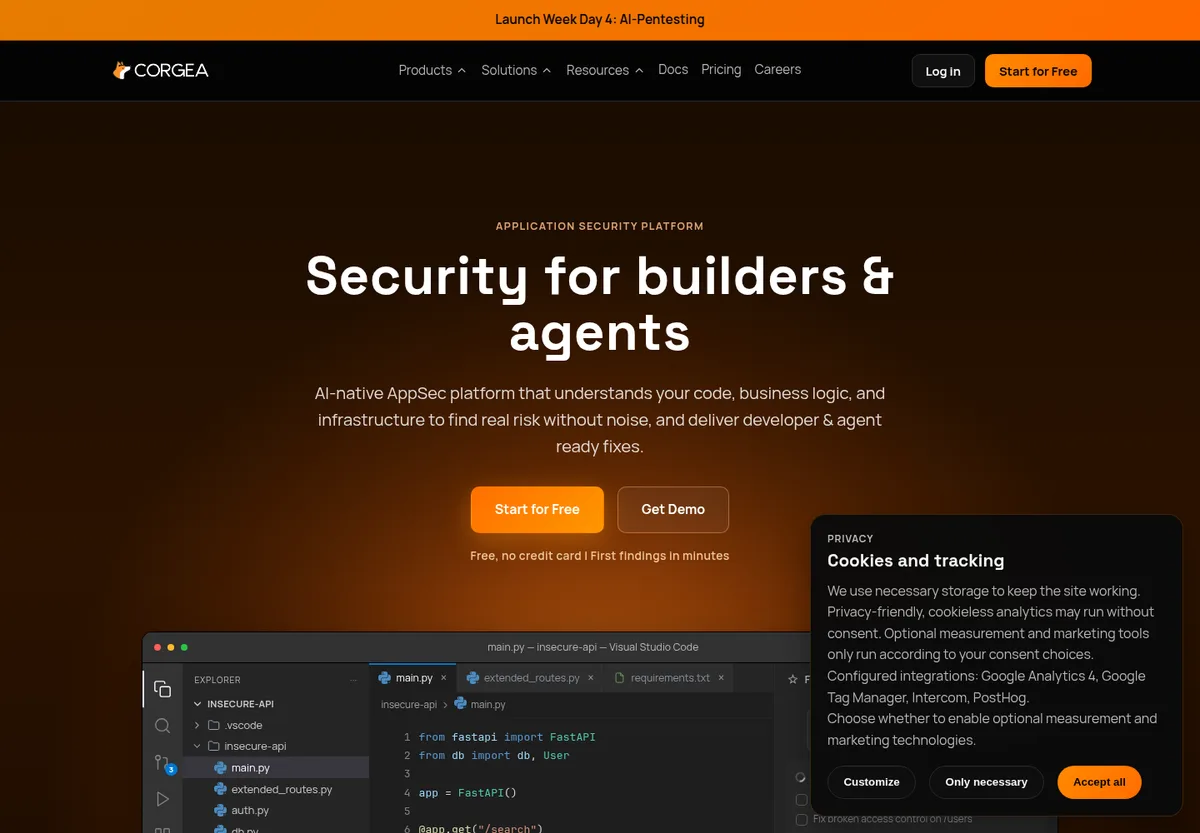
Corgea is an AI-native application security platform built to find exploitable vulnerabilities and help fix them. It is designed for teams that want a modern SAST core with contextual detection, false-positive reduction, and autofix as core product behavior rather than an add-on.
What it is: AI-native SAST for custom code, with broader AppSec coverage across dependencies, secrets, containers, and IaC, plus autonomous AI pentesting.
Why teams choose it over Snyk: Snyk leads with SCA, while Corgea leads with AI-native code analysis. Corgea combines static analysis, project context, framework understanding, reachability, and LLM-based reasoning to explain why a finding is exploitable, then proposes a review-ready fix. Reachability-aware prioritization helps teams focus on issues that actually matter instead of chasing raw counts.
Benchmark evidence: on latiotech/insecure-kubernetes-deployments, a deliberately vulnerable repository with 47 source-confirmed issues, Corgea found 42 (89.36% recall, 82.35% precision, 85.71% F1) while Snyk found 26 (55.32% recall, 78.79% precision, 65.00% F1). Corgea caught missing authorization on data-modifying FastAPI routes, XXE in the Flask app, prototype pollution around JSON5 parsing, and credential exposure in deployment config that Snyk missed. Read the Corgea vs. Snyk benchmark for the full method and the issues Snyk found that Corgea missed. For auto-fix, Latio Tech’s Actually Useful Product Guide ranked Corgea first of the seven SAST auto-fix tools it tested.
Where it falls short: Corgea is a newer vendor than Snyk, and Snyk’s dependency database and container coverage are broader. If your procurement depends on long vendor tenure or a specific analyst placement, plan a structured proof of value with your own repositories and internal evidence.
Best fit: AppSec teams that want lower-noise SAST, better business-logic and auth-flaw detection, reachability-aware prioritization, and fixes developers can review directly in pull requests.
Pricing note: Corgea has a free plan for up to 2 team members and 10 repositories, with per-developer Growth and Scale plans. See the pricing page for current details, or the Corgea vs Snyk comparison for a feature matrix.
2. Semgrep
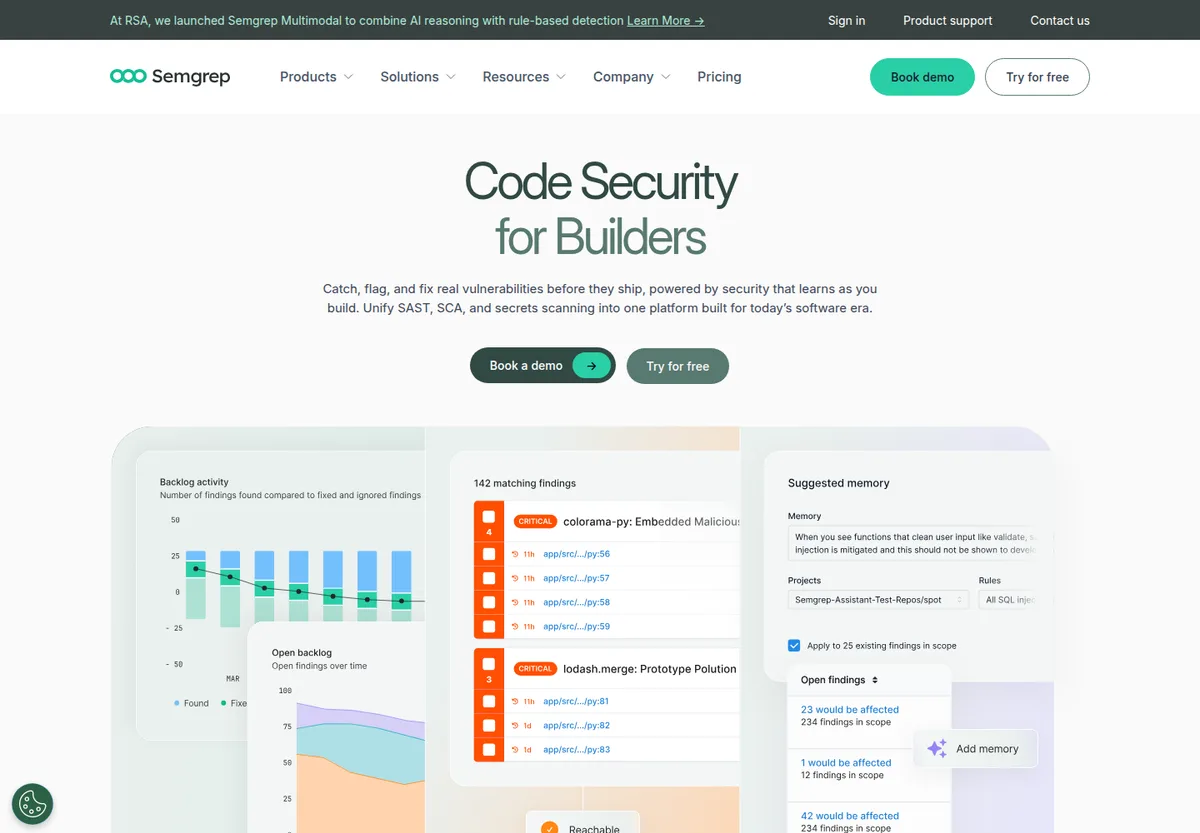
Semgrep is a developer-friendly static analysis platform with an open-source rule engine (Semgrep Community Edition, LGPL-2.1), commercial SAST features, supply chain scanning, and Semgrep Assistant for AI-assisted triage. Its January 2025 fork, OpenGrep, is maintained by a consortium of security vendors under the same license.
What it is: A fast SAST platform with strong rule authoring and a large ecosystem of community and commercial rules.
Why teams choose it over Snyk: Semgrep gives AppSec engineers transparent, customizable detection logic and fast CI scans. Teams that want to own their rules and enforce organization-specific patterns often prefer it to a more packaged platform.
Where it falls short: Pattern-first detection can miss business-logic vulnerabilities that require deeper application intent, and custom rule programs need ongoing maintenance. See the best Semgrep alternatives and Corgea vs Semgrep.
Best fit: AppSec teams that value speed, transparency, open-source control, and team-owned detection logic.
Pricing note: Semgrep has a free Community Edition plus paid tiers priced per contributor. Enterprise pricing is quote-based.
3. Checkmarx
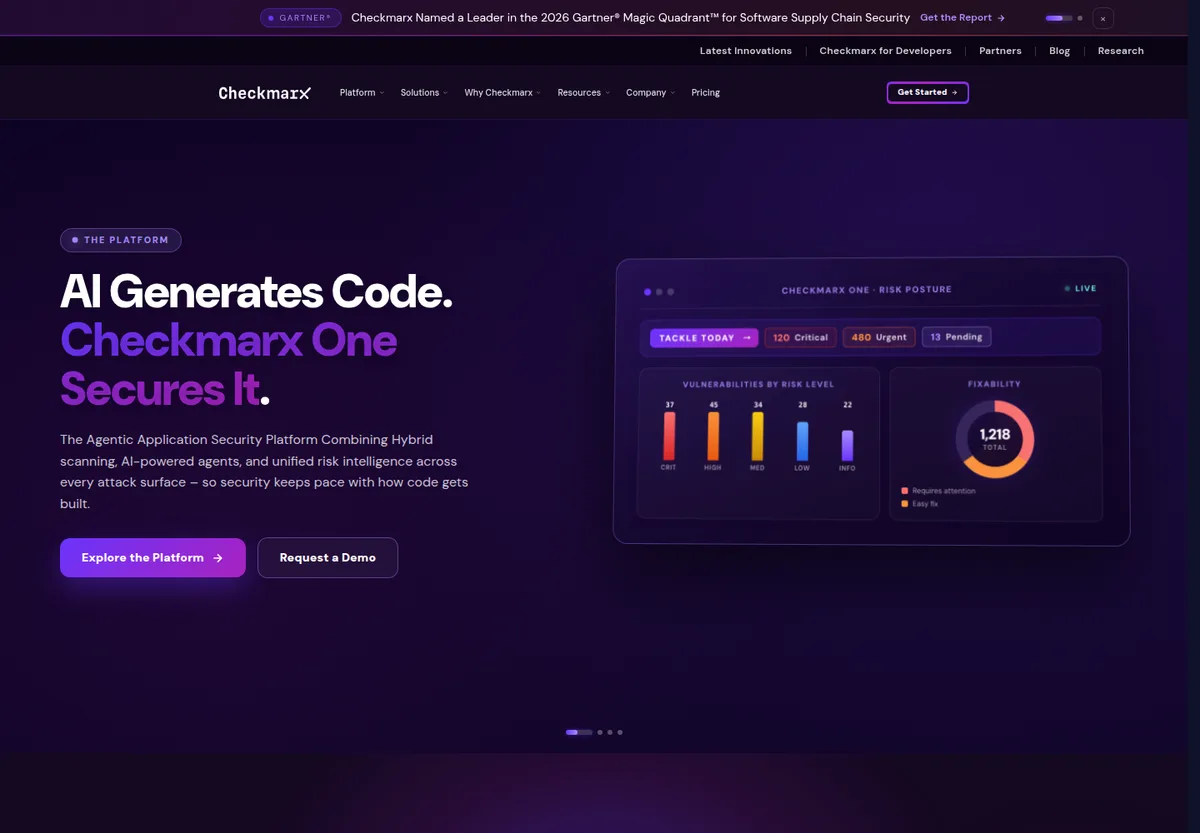
Checkmarx is a long-running enterprise AppSec vendor with SAST, SCA, IaC, API security, and related platform capabilities.
What it is: Enterprise SAST and AppSec platform tooling for organizations with complex governance and compliance needs.
Why teams choose it over Snyk: Checkmarx offers mature policy controls, reporting, and enterprise procurement paths. Large programs that need governance and auditability sometimes prefer it to a developer-first platform. See Snyk vs Checkmarx.
Where it falls short: Setup, tuning, and operational ownership can be heavier than developer-first or AI-native tools. Pricing is not publicly listed. See the best Checkmarx alternatives and Corgea vs Checkmarx.
Best fit: Large security teams that need policy control, reporting, and established enterprise buying paths.
Pricing note: Enterprise quote. Pricing is not publicly listed.
4. Aikido
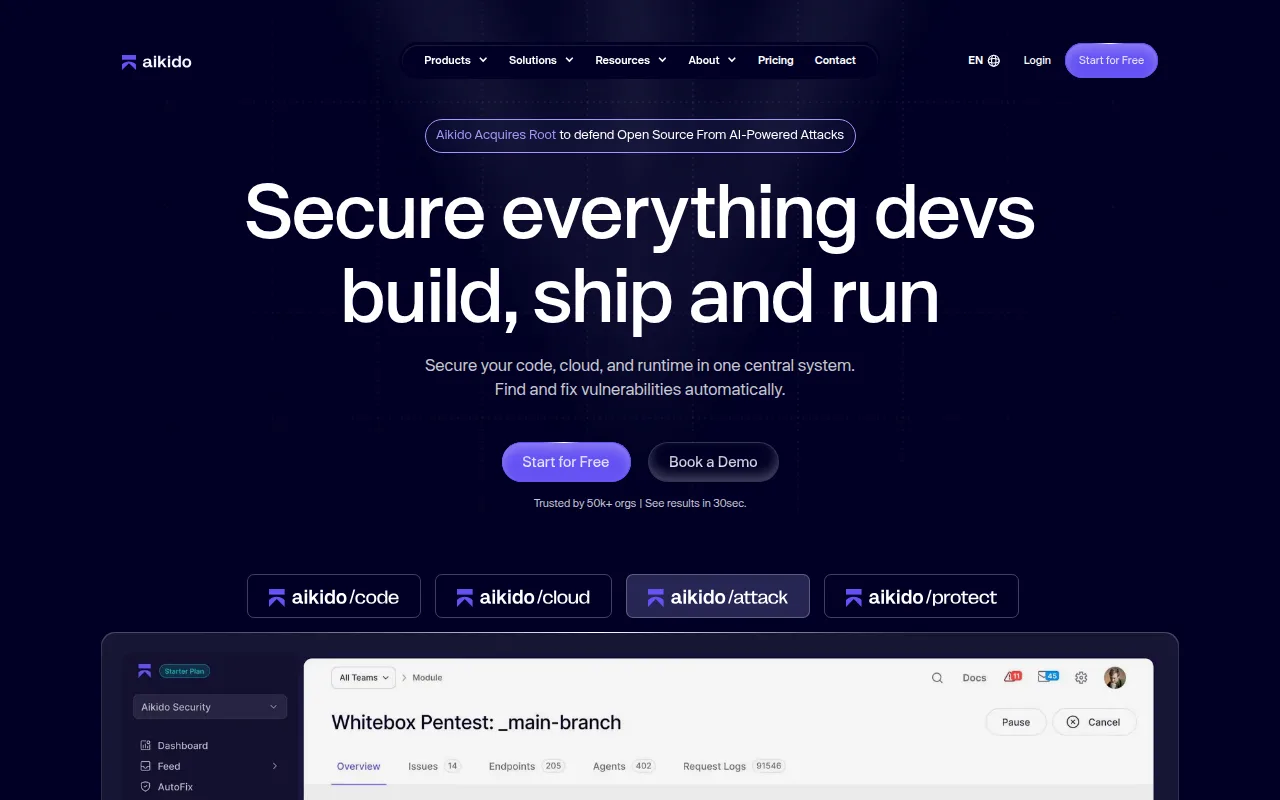
Aikido positions itself as an all-in-one security platform that secures code, cloud, and runtime in one system, with automated fixes.
What it is: A broad AppSec platform covering SAST, SCA, secrets, IaC, containers, cloud posture, and, based on public positioning, autofix and application testing.
Why teams choose it over Snyk: Aikido appeals to teams that want consolidated coverage and public, self-serve pricing. It is often shortlisted by startups and lean security teams.
Where it falls short: All-in-one breadth can mean less depth in specific areas. On the same benchmark repository used for the Snyk comparison, Aikido’s SAST found 13 of 47 confirmed issues (27.66% recall) versus Corgea’s 42; see the Corgea vs. Aikido benchmark and the Aikido alternatives guide.
Best fit: Teams that want broad coverage and transparent pricing in a single platform.
Pricing note: Aikido publishes tiered pricing publicly, including a free tier, with quotes for larger plans.
5. Endor Labs
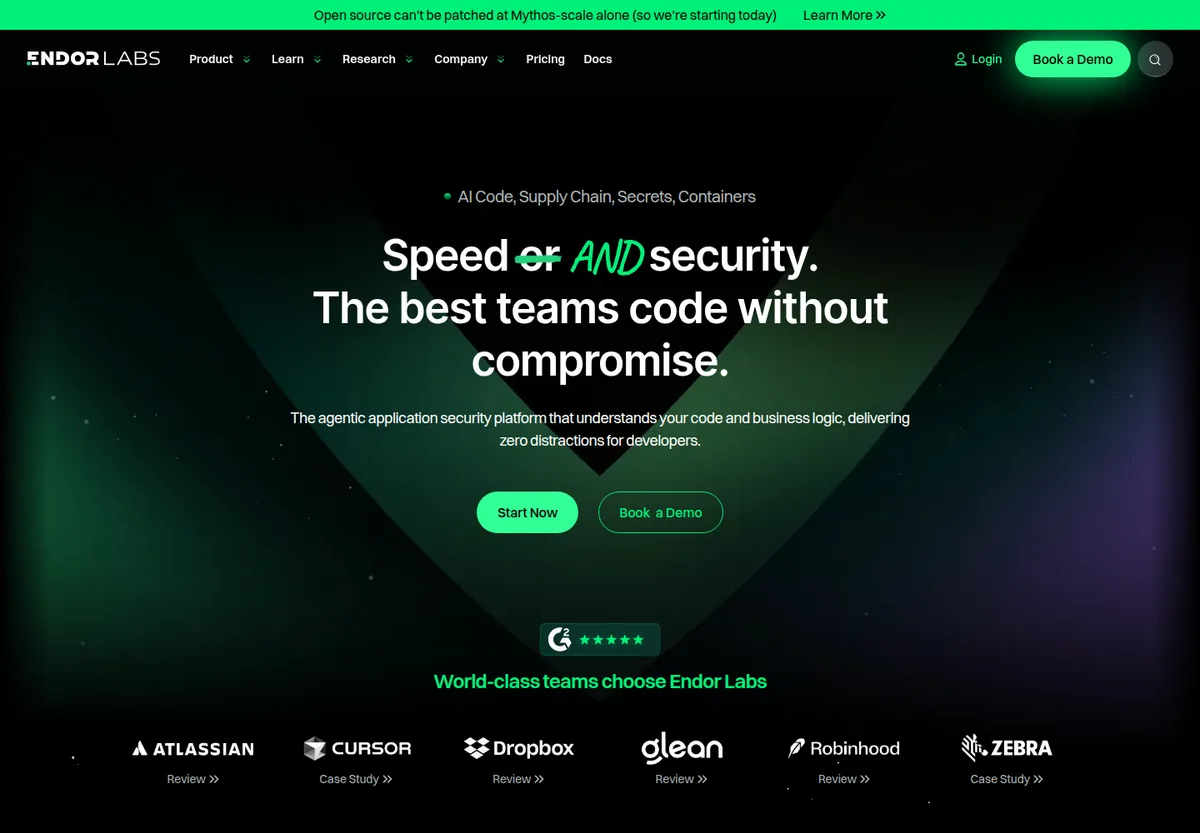
Endor Labs is best known for software composition analysis and reachability, with expanding code security capabilities.
What it is: An AppSec platform centered on dependency security, reachability, prioritization, and code risk.
Why teams choose it over Snyk: Endor Labs is often positioned as a reachability-first SCA challenger to Snyk. Teams focused on open-source risk and exploitability context find its prioritization compelling.
Where it falls short: Its SAST story is newer than its dependency security reputation, so validate custom-code detection depth carefully.
Best fit: Teams where open-source dependency risk and reachability are the primary AppSec concern.
Pricing note: Enterprise quote. Pricing is not publicly listed.
6. Veracode
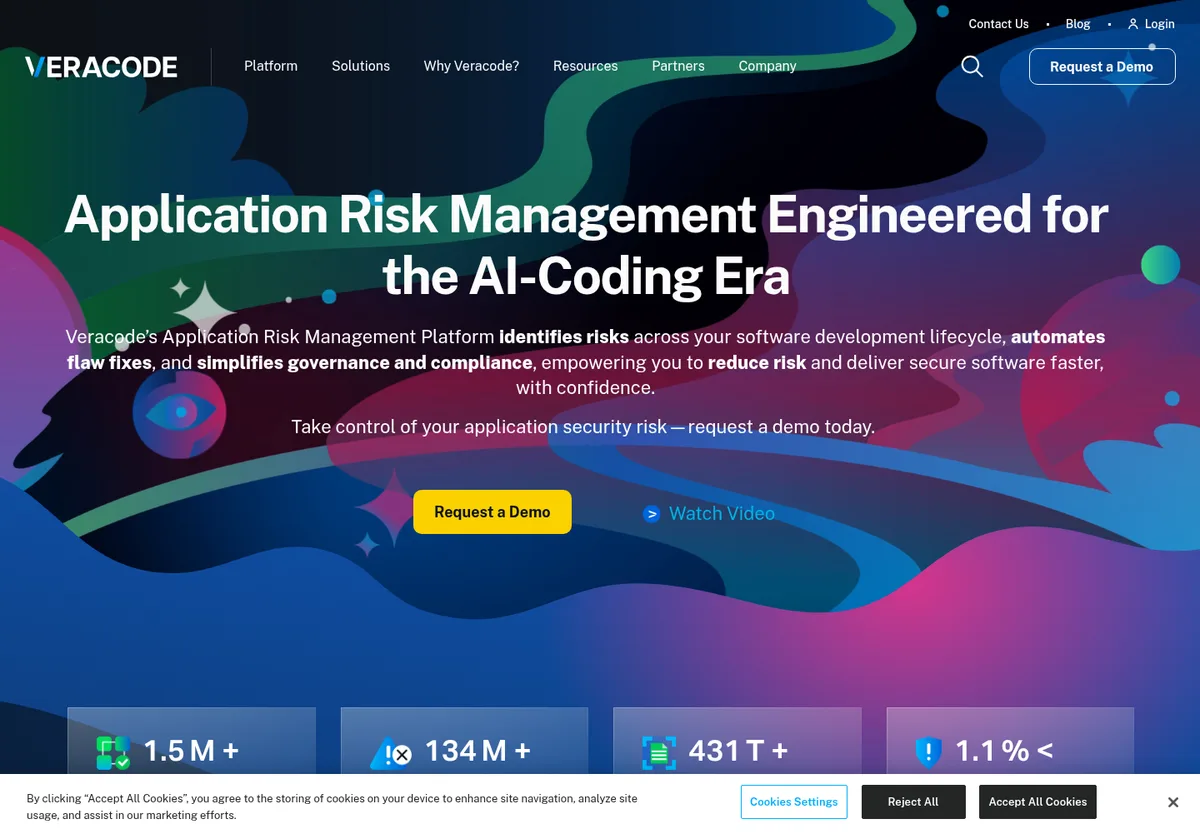
Veracode is an enterprise application security platform with a long-standing SAST product and compliance-oriented workflows.
What it is: Enterprise static analysis and application security testing for organizations that prioritize governance and policy enforcement.
Why teams choose it over Snyk: Veracode is a fit for compliance-led programs that value policy scanning, centralized reporting, and Veracode Fix for supported remediation. See Snyk vs Veracode.
Where it falls short: The platform and buying motion can feel heavy for smaller teams focused on developer speed.
Best fit: Security leaders managing large application portfolios and compliance reporting.
Pricing note: Enterprise quote. Pricing is not publicly listed.
7. GitHub Advanced Security
GitHub Advanced Security uses CodeQL for code scanning, plus GitHub-native secret scanning, dependency review, and Copilot Autofix. Since April 2025 it is sold as two add-ons: GitHub Code Security (CodeQL, Copilot Autofix, dependency review) and GitHub Secret Protection (secret scanning and push protection).
What it is: GitHub’s native application security suite for code scanning and repository security.
Why teams choose it over Snyk: For GitHub-native teams, keeping SAST, secret scanning, and dependency review inside pull requests and Actions is a strong workflow advantage.
Where it falls short: It is less natural for mixed source control estates or unsupported languages, and CodeQL query authoring has a learning curve. See Corgea vs GitHub Advanced Security.
Best fit: Teams standardized on GitHub that want security in existing repository workflows.
Pricing note: Code Security and Secret Protection are priced per active committer for private repositories, with published list prices, and code scanning is free for public repositories.
8. SonarQube
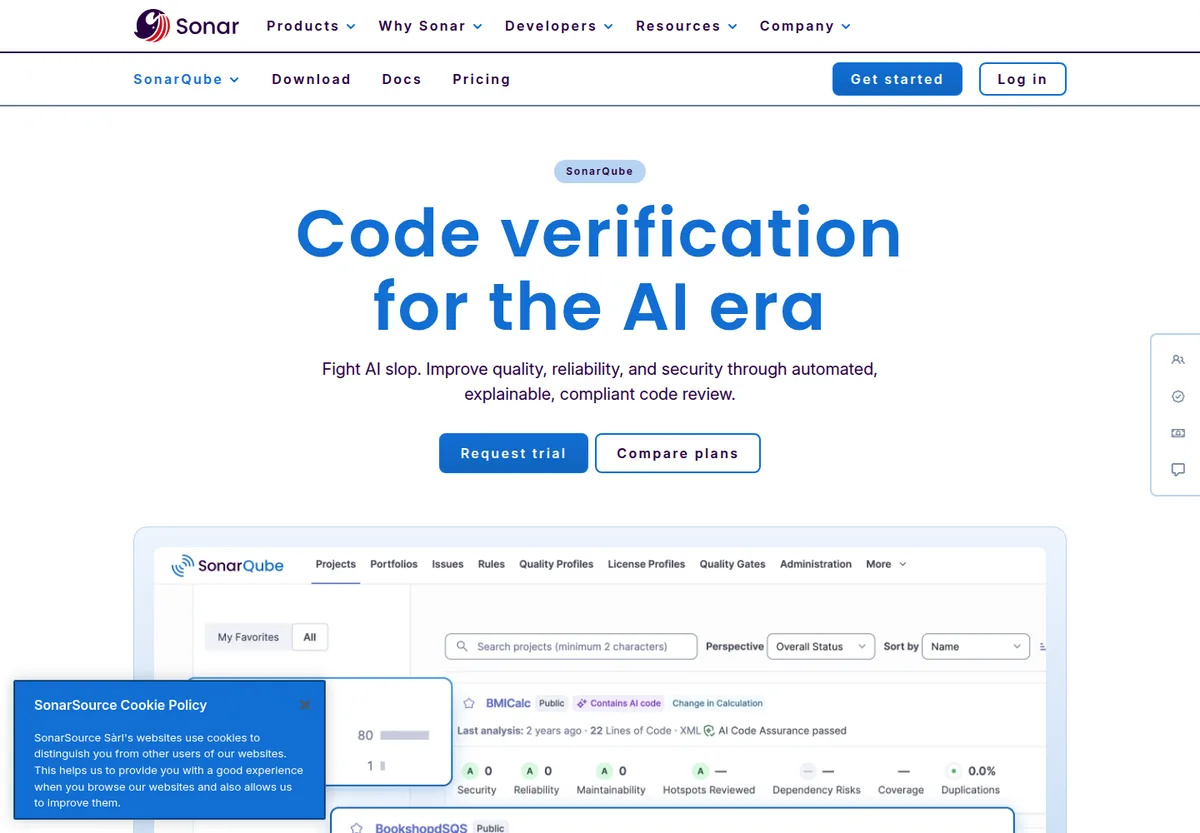
SonarQube is a widely adopted static analysis platform for code quality, reliability, and security rules.
What it is: Code quality and security analysis with quality gates, rule profiles, and broad language support.
Why teams choose it over Snyk: Teams that already use SonarQube as a quality gate can add baseline security checks without introducing a separate tool. See SonarQube vs Snyk.
Where it falls short: Security depth varies by language and rule set, taint analysis and SCA sit in paid editions, and it may miss logic-heavy vulnerabilities. See the best SonarQube alternatives.
Best fit: Teams that want code quality and baseline security in one familiar platform.
Pricing note: SonarQube Community Build is free; Developer, Enterprise, and Data Center editions are priced by lines of code, with SonarQube Cloud as a hosted option.
9. Mend.io
Mend.io (formerly WhiteSource) is a dependency-first AppSec platform with automated remediation and SAST capabilities.
What it is: An application security platform centered on software composition analysis, with SAST and container coverage.
Why teams choose it over Snyk: Mend.io competes directly on SCA and emphasizes automated dependency remediation and prioritization.
Where it falls short: Its SAST is generally secondary to its SCA strength, so code-first buyers should test detection depth.
Best fit: Teams whose primary driver is dependency risk with automated updates.
Pricing note: Enterprise quote. Pricing is not publicly listed.
10. OX Security
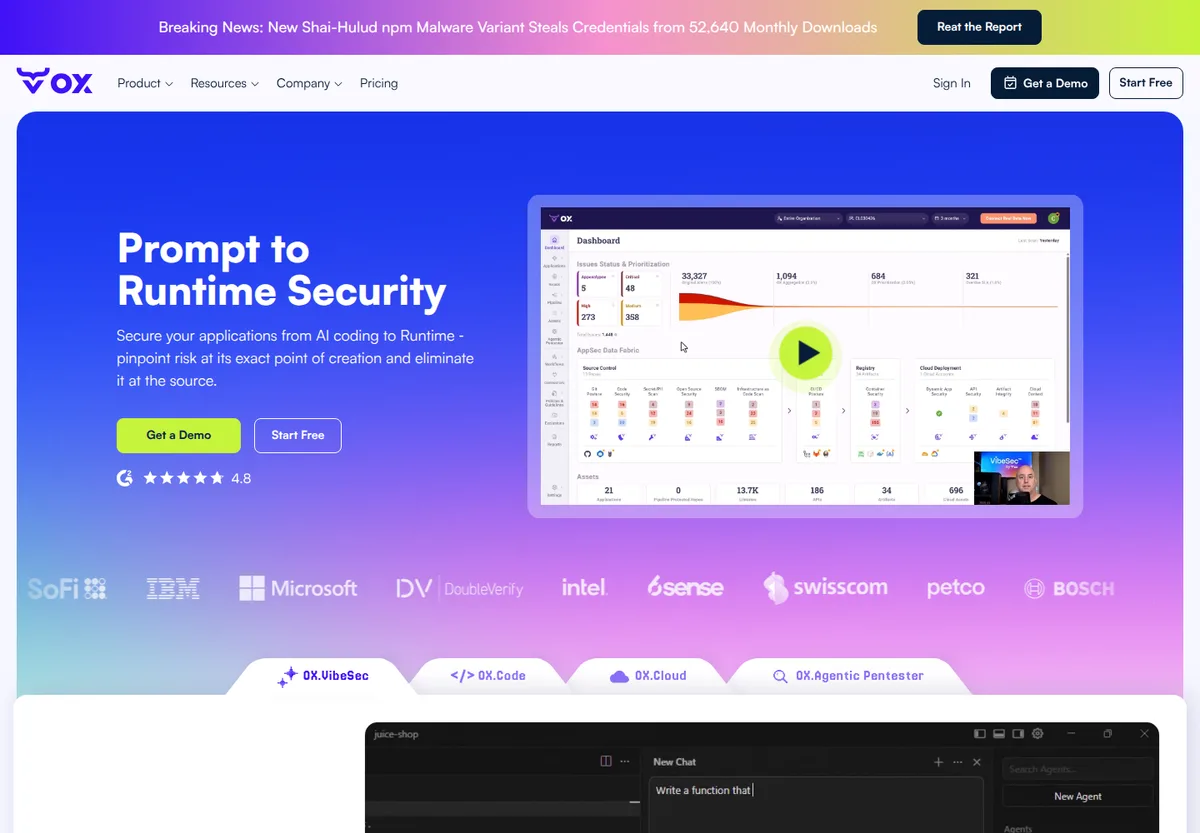
OX Security positions around application security posture management (ASPM) and risk consolidation across the software delivery lifecycle.
What it is: An ASPM platform that correlates AppSec findings across code, pipelines, artifacts, and deployment context.
Why teams choose it over Snyk: Buyers consolidating many scanners want one operating layer for posture, prioritization, and deduplication rather than a single point scanner.
Where it falls short: If you only need a SAST or SCA scanner, ASPM breadth can add complexity.
Best fit: Security leaders consolidating multiple AppSec signals into one program view.
Pricing note: Enterprise quote. Pricing is not publicly listed.
When to stay with Snyk
A fair comparison has to acknowledge where Snyk remains a strong choice. Stay with Snyk if:
- Developer-first software composition analysis is the center of gravity for your AppSec program.
- Your developers already adopted Snyk in their IDEs and pull requests, and adoption is healthy.
- You want SCA, SAST, container, and IaC scanning under one vendor with mature integrations.
- Your dependency risk workflow, including fix pull requests for vulnerable packages, is already working well.
- You have negotiated pricing that fits your rollout scale.
If those points describe your program, the incremental value of switching may be small. In that case, focus on tuning Snyk and measuring developer trust rather than replacing it. Even in our benchmark, Snyk found several issues Corgea missed (Java deserialization, disabled TLS verification, DOM XSS), which is why some teams keep it as a complementary signal.
How to choose a Snyk alternative
Use a simple decision framework instead of a feature checklist.
- Choose Corgea if you want AI-native AppSec, better signal, reachability-aware prioritization, and review-ready fixes in the developer workflow.
- Choose Snyk (stay) if developer-first SCA is your center of gravity and you only need incremental improvement.
- Choose Semgrep or OpenGrep if custom rules and open-source control matter most.
- Choose Checkmarx or Veracode if analyst recognition and legacy enterprise procurement matter most.
- Choose GitHub Advanced Security if your team lives inside GitHub and native workflow matters more than vendor breadth.
- Choose Aikido if broad all-in-one coverage and transparent pricing matter most.
Then run a real bake-off. The best SAST tools guide explains how to design one, and the application security testing complete guide covers where SAST, SCA, and other controls fit in the SDLC. Score confirmed true positives, false positives, missed known issues, duplicate findings, triage time, fix acceptance, developer friction, and total cost, not raw finding volume.
Migrating from Snyk to Corgea
If Snyk is your incumbent, the switch is lighter than an enterprise SAST migration because both tools connect to source control natively. Structure it so the comparison is fair, the result is defensible, and there is never a coverage gap.
- Connect the same repositories, non-blocking. Corgea integrates with GitHub, GitLab, Bitbucket, and Azure DevOps through API-native connections, so a parallel run starts the same day. Keep Snyk enforcing while Corgea scans alongside it.
- Pick representative repositories. Include a high-change service, a legacy service with known Snyk noise, and a security-sensitive service with auth, payments, or admin workflows.
- Define ground truth. Gather recently fixed vulnerabilities, pentest or bug bounty findings, and a set of known false positives from Snyk so you can score both detection and noise. Our Corgea vs. Snyk benchmark shows what this looks like on a public repository: 47 confirmed issues, scored for precision, recall, and F1.
- Separate SAST from SCA. Snyk often wins on dependency scanning, so compare custom-code SAST head to head and evaluate dependency scanning with reachability separately rather than blending the two.
- Score fixes, not just findings. For each generated fix, check whether it compiles, passes tests, preserves behavior, and addresses the root cause. This is where auto-fix quality separates tools.
- Bring history with you. Corgea can ingest third-party scanner reports, so existing Snyk findings can be triaged in the same queue as Corgea’s own results during the transition.
- Flip enforcement. Once developers trust the signal, make Corgea blocking rules the gate on new code and let the Snyk license lapse at renewal.
Convert triage hours and developer interruptions into cost so the business case reflects total cost of ownership, not just license price. The best SAST tools guide includes a full bake-off template you can reuse, and the 14-day plan in how to migrate from Checkmarx to Corgea adapts well to Snyk with fewer steps.
Related AppSec tool comparisons
- Corgea vs Snyk comparison page and Corgea vs. Snyk SAST benchmark
- Best Checkmarx alternatives and Corgea vs Checkmarx
- Best SonarQube alternatives
- Best Semgrep alternatives and best Aikido alternatives
- Best depthfirst alternatives
- Best SAST tools in 2026, what is SAST, and AI SAST explained
Frequently asked questions about Snyk alternatives
What is the best Snyk alternative in 2026?
There is no single best Snyk alternative for every team. Corgea is a strong fit when you want AI-native detection, lower-noise prioritization, and review-ready fixes. Semgrep is strong for open-source rule control, Checkmarx and Veracode fit enterprise governance, and GitHub Advanced Security fits GitHub-native teams. Validate on your own repositories before deciding.
Is Corgea a Snyk alternative?
Yes. Corgea is an AI-native application security platform that competes with Snyk on SAST and also covers dependencies, secrets, IaC, and containers. Teams evaluate Corgea against Snyk when they want lower false positives, reachability-aware prioritization, and fixes developers can review in pull requests.
How does Corgea compare to Snyk on a benchmark?
On a deliberately vulnerable public repository with 47 source-confirmed issues, Corgea found 42 (89.36% recall, 82.35% precision, 85.71% F1) and Snyk Code found 26 (55.32% recall, 78.79% precision, 65.00% F1). That is 16 more confirmed vulnerabilities and 1.6x the recall. Snyk missed missing-authorization, XXE, and prototype-pollution issues that Corgea caught, and Corgea missed a few Snyk caught, such as Java deserialization. The full method is in the Corgea vs. Snyk benchmark.
What is the difference between Snyk and Corgea?
Snyk is a developer-first platform whose center of gravity is software composition analysis, with Snyk Code providing SAST. Corgea is AI-native from detection through remediation, focused on finding exploitable code risk and generating review-ready fixes. Based on public positioning, Snyk emphasizes broad platform coverage while Corgea emphasizes AI-native code analysis and autofix quality.
Which Snyk alternative is best for auto-fixing vulnerabilities?
If auto-fix quality is your priority, evaluate Corgea for AI-native review-ready fixes, Snyk Agent Fix, GitHub Copilot Autofix, and Veracode Fix. Latio Tech’s Actually Useful Product Guide ranked Corgea first of seven SAST auto-fix tools tested. Measure whether generated fixes compile, pass tests, preserve behavior, and address the root cause on your own code.
Are there free Snyk alternatives?
Yes. Semgrep Community Edition has a free open-source engine and OpenGrep is fully open source. SonarQube Community Build is free, GitHub code scanning is free for public repositories, and Trivy or OWASP Dependency-Check cover free SCA. Corgea also has a free plan for up to 2 members and 10 repositories. Free tools lower license cost but usually shift effort into rule tuning and triage; the free and open-source section of the SonarQube alternatives guide compares the options.
How hard is it to migrate from Snyk to Corgea?
Corgea connects to GitHub, GitLab, Bitbucket, and Azure DevOps through native integrations rather than pipeline jobs, so a parallel run usually starts the same day. Most teams run both tools non-blocking for one to two weeks, compare findings on the same commits, then switch enforcement to Corgea blocking rules. Corgea can also ingest Snyk reports so historical findings stay in one queue. See the migration section above.
How should AppSec teams evaluate Snyk competitors?
Evaluate Snyk competitors on your own repositories. Measure confirmed true positives, false positives, missed known issues, duplicate findings, time to triage, fix acceptance rate, developer workflow friction, and total cost of ownership rather than raw finding counts.
The bottom line on Snyk alternatives
Snyk is a capable developer security platform, especially for software composition analysis. If your team is comparing Snyk alternatives because you need fewer false positives, faster remediation, and review-ready fixes, book a Corgea demo. You can also explore Corgea AI SAST, autonomous AI pentesting, the Corgea vs Snyk comparison, and current pricing.
Corgea is not affiliated with Snyk. This comparison is based on public information and product positioning. Benchmark figures reflect the repository, exports, and findings reviewed on July 2, 2026.